Logic.
Strengthen one well-built page so it can support far more than a single publish moment.
Logic brings together connected content principles that help one article do more. It strengthens source pages, improves structure, supports machine readability, and enables wider reuse across search, answer surfaces, social, audio, video, and paid activity. The result is more consistent, measurable, maintainable, and scalable content tied to clearer outcomes.
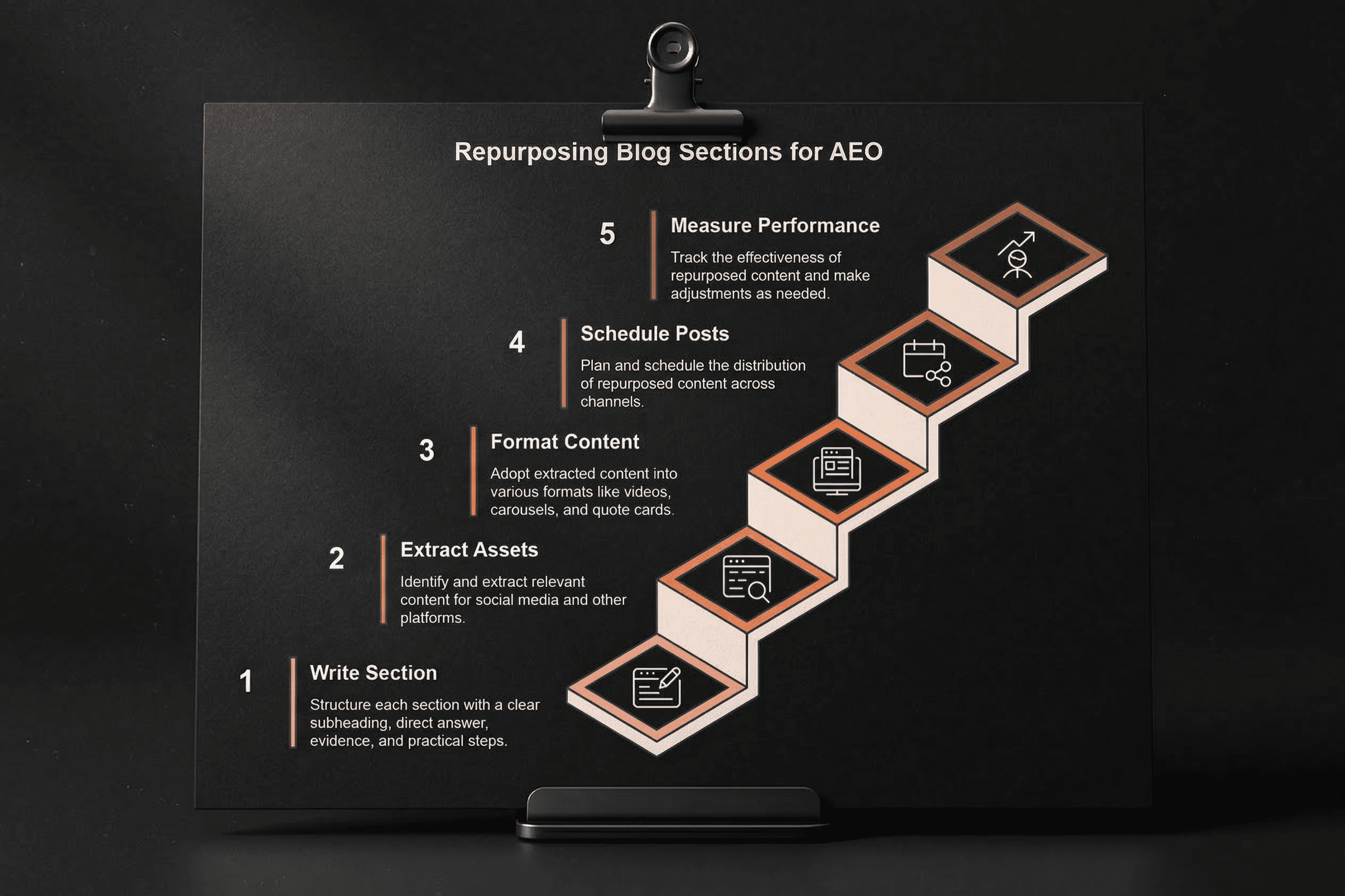
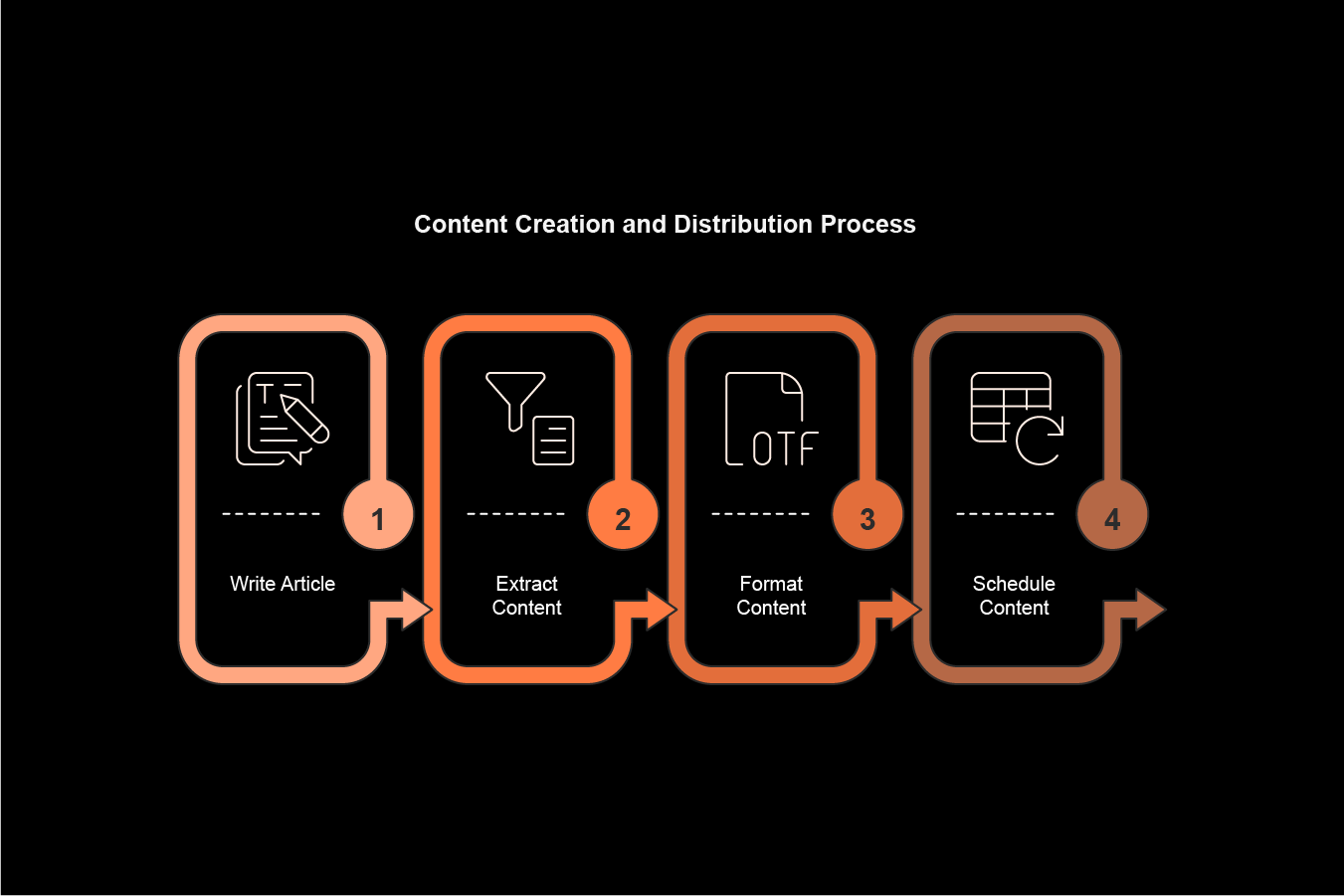
Repurposing Blog Sections for AEO
1. Write Section - Structure each section with a clear subheading, direct answer, evidence, and practical steps.
2. Extract Assets - Identify and extract relevant content for social media and other platforms.
3. Format Content - Adapt extracted content into various formats like videos, carousels, and quote cards.
4. Schedule Posts - Plan and schedule the distribution of repurposed content across channels.
5. Measure Performance - Track the effectiveness of repurposed content and make adjustments as needed.
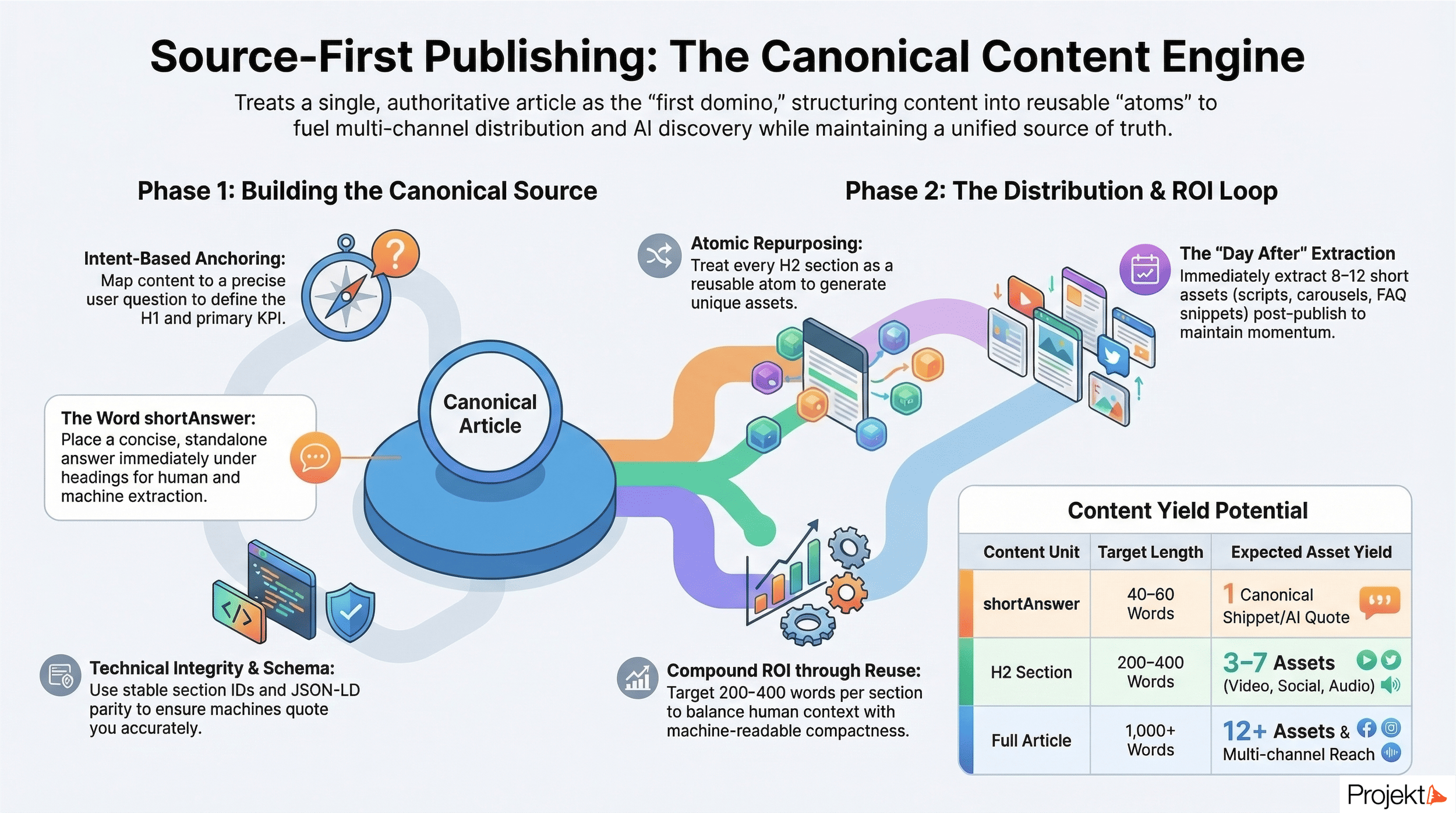
Source-First Publishing
Build content that compounds, connects, and keeps working.
Source-first publishing begins with one strong source asset, not scattered one-off outputs. It turns a single well-structured article into the foundation for wider distribution, stronger discoverability, and reusable content that supports search, AI retrieval, and long-term growth.
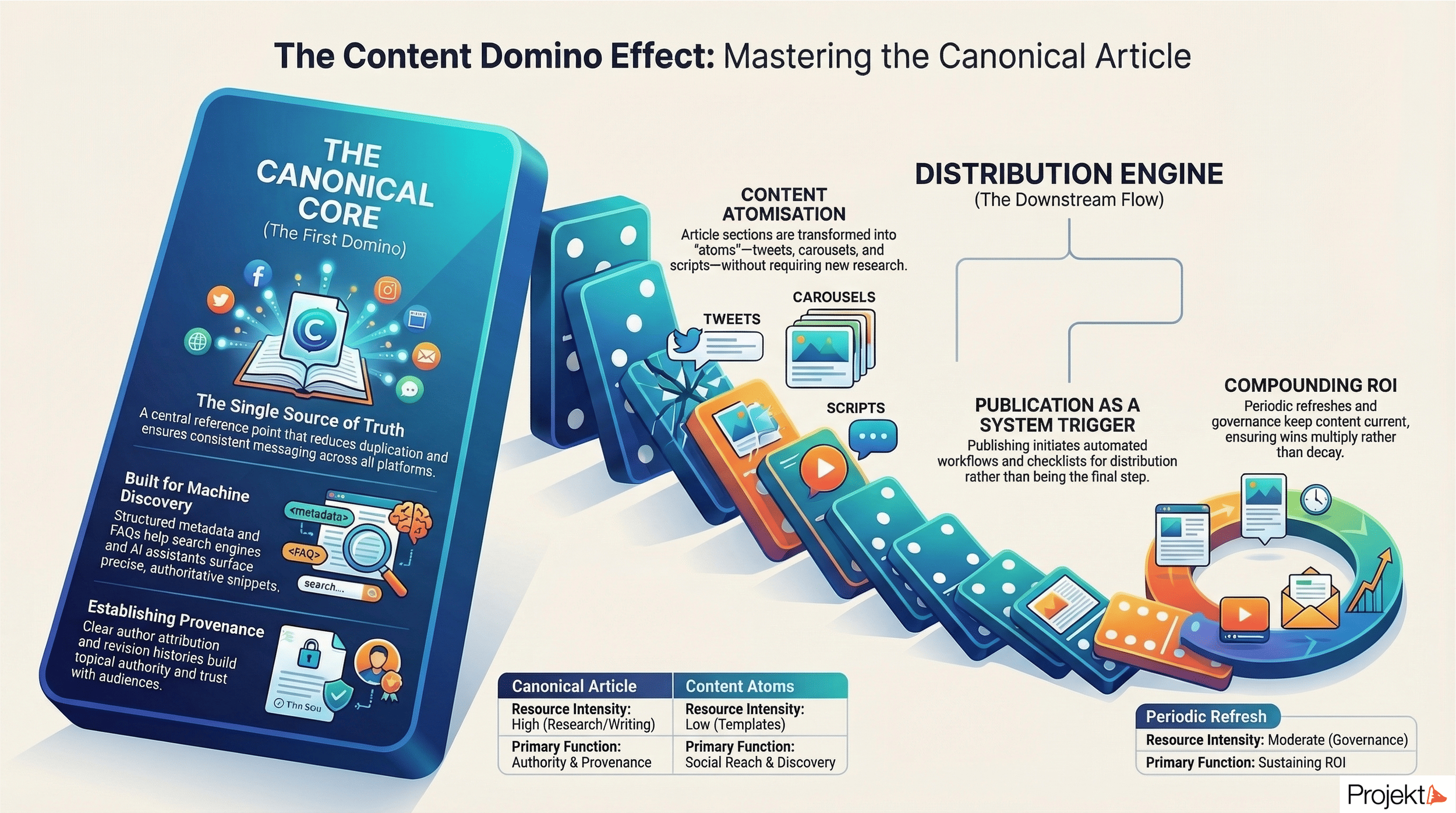
Canonical Content Strategy
Create one source of truth that strengthens every channel.
A canonical article gives content a clear centre of gravity. It reduces duplication, simplifies updates, and gives teams, partners, and machines one trusted source to reference so authority, consistency, and reuse become easier to maintain over time.
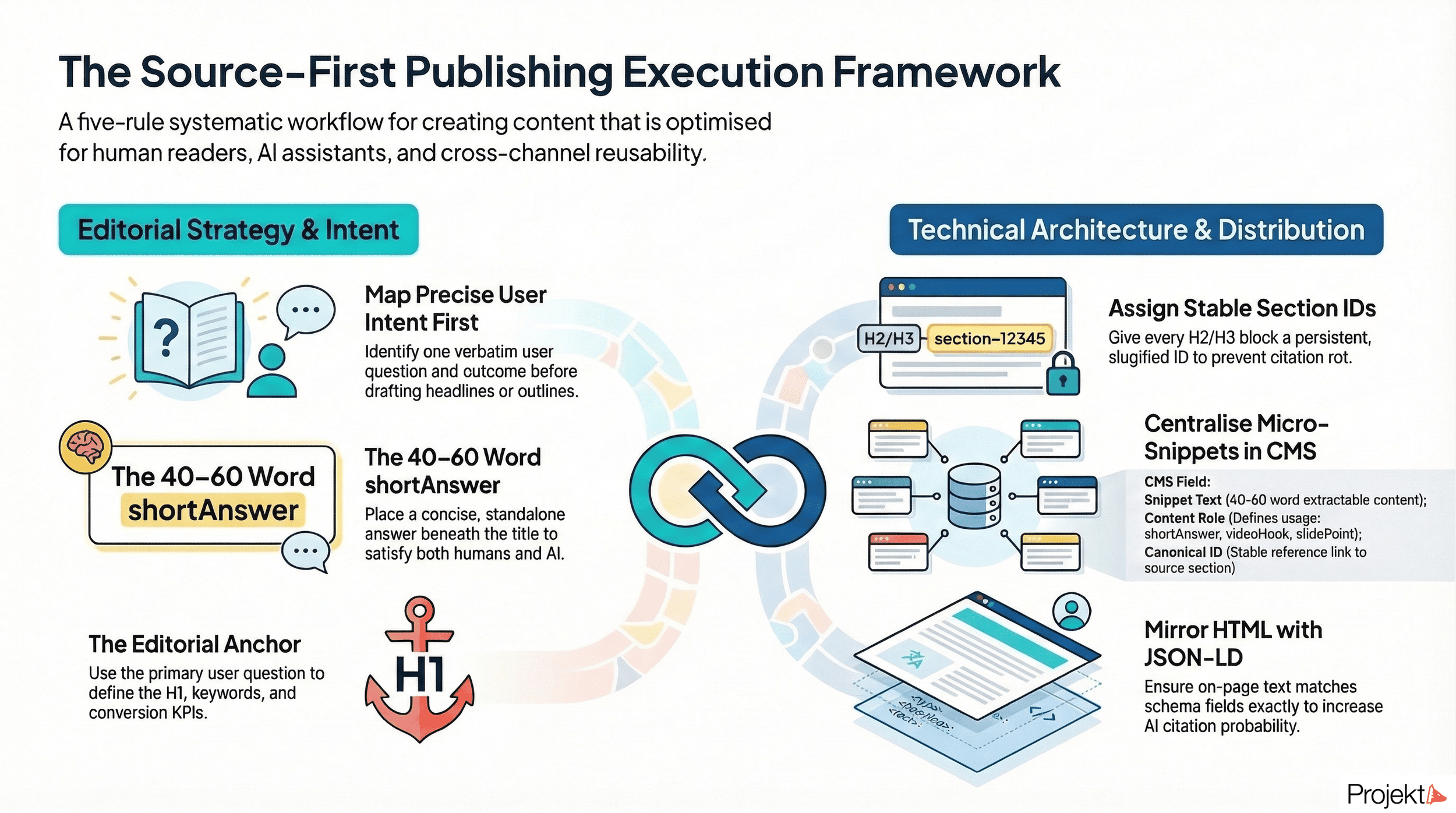
AI-Ready Publishing
Build content machines can read, trust, and surface.
AI-ready publishing starts with real user questions, clear intent, and structured answers. By combining strong editorial design with machine-readable signals, content becomes easier to understand, easier to cite, and better positioned for modern search and answer environments.
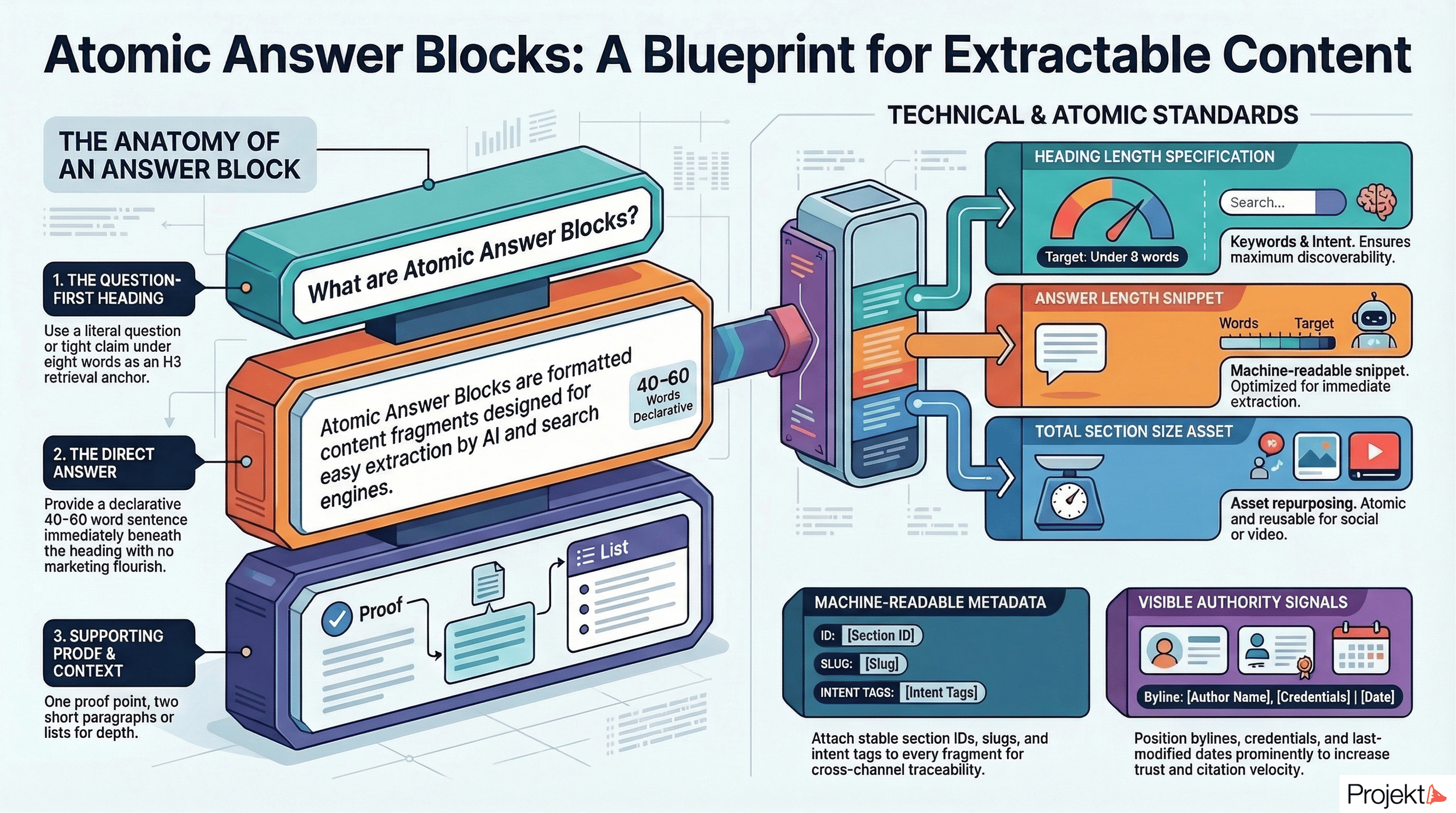
Atomic Answer Blocks
Turn sections into clear, extractable units of value.
Atomic answer blocks structure content into direct question-led sections with concise answers, proof points, and focused context. This makes pages easier for people to scan, easier for search systems to extract, and easier to repurpose into other useful assets.
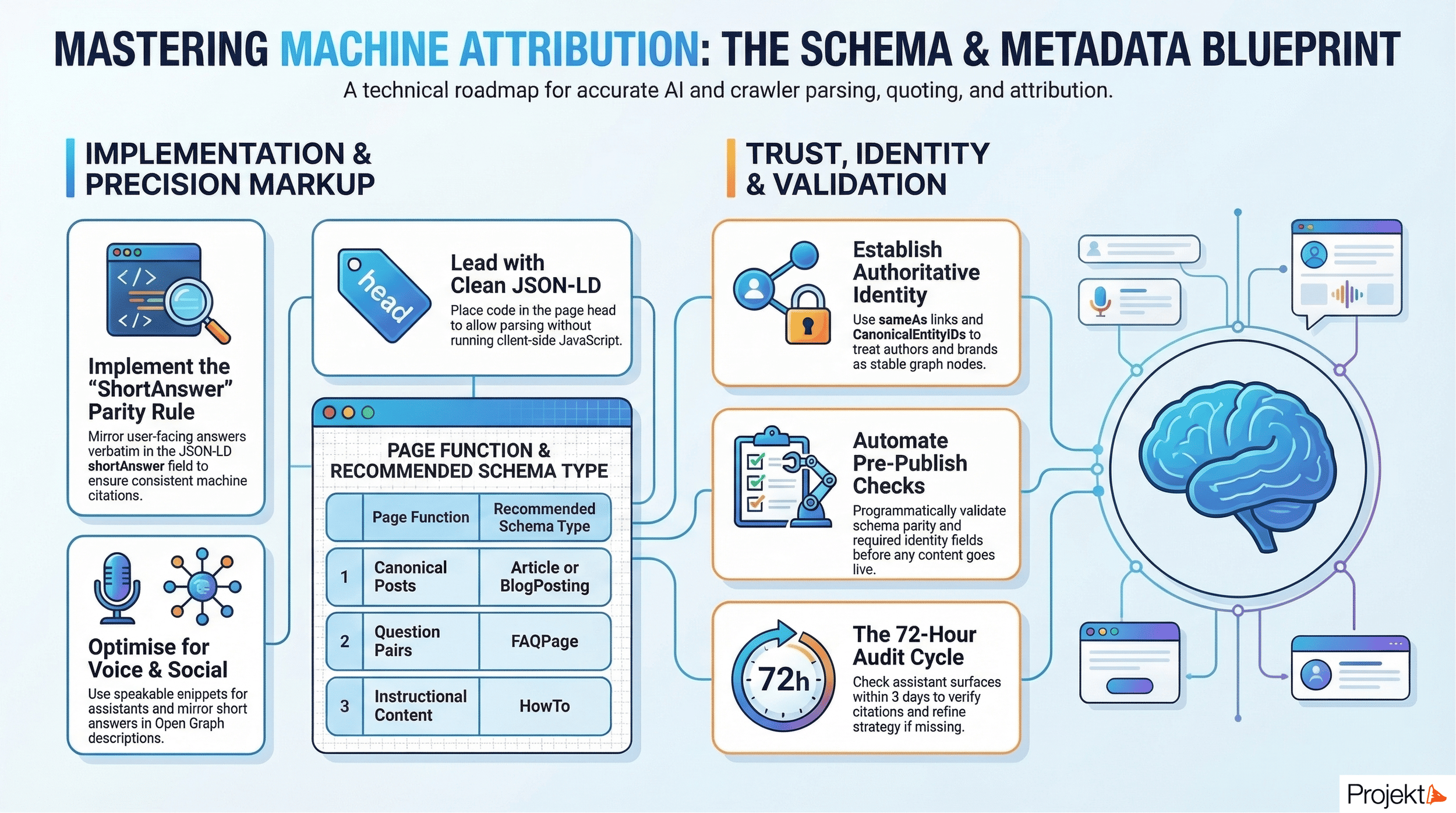
Machine Attribution
Help machines understand your content and credit it properly.
Machine attribution relies on clear metadata, structured markup, and consistent identity signals. When page content, schema, authorship, and platform previews align, content becomes easier to interpret, easier to trust, and more likely to be cited correctly across digital surfaces.
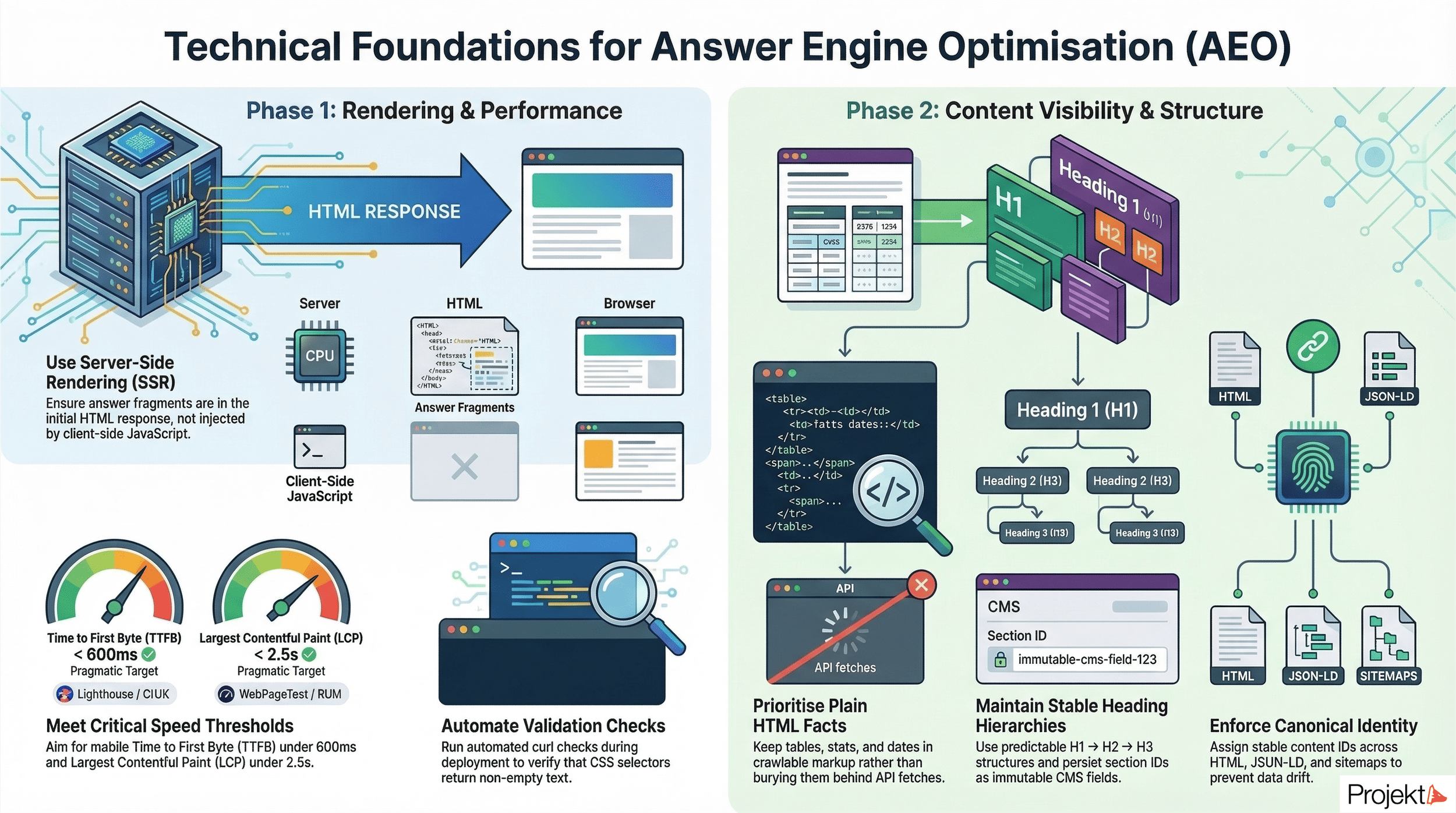
Answer Engine Optimisation
Make your content faster, clearer, and easier to extract.
Answer engine optimisation is built on technical clarity. It keeps answers in the initial HTML, improves speed, protects structure, and removes ambiguity so search engines and AI systems can find, parse, and reuse the most important information more reliably.
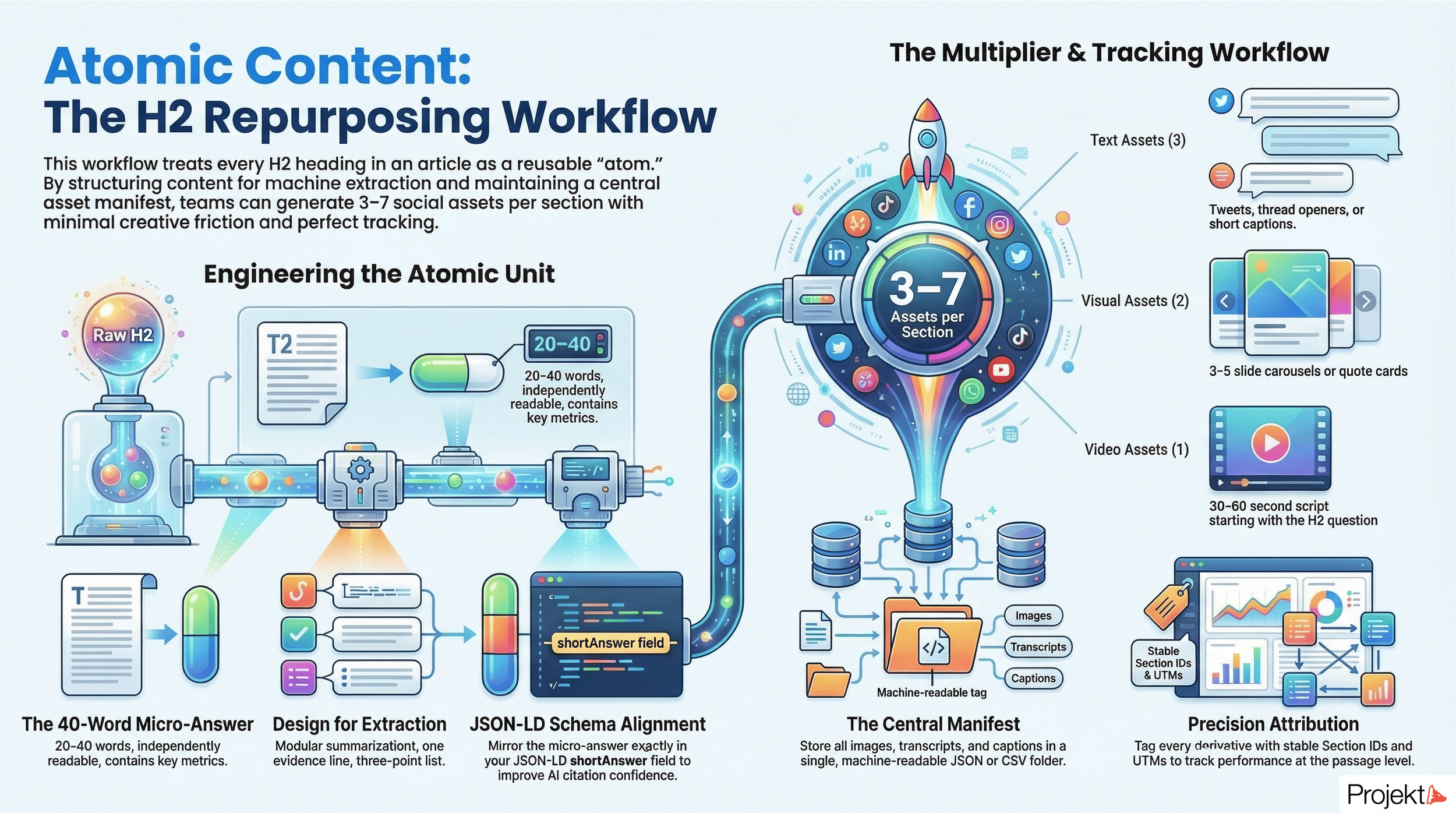
Content Atoms
Turn one article into many assets without starting over.
Content atoms break an article into smaller reusable parts that can power social posts, videos, captions, carousels, and more. With clearer structure and source-linked reuse, one piece of work can support broader output without losing consistency or accuracy.
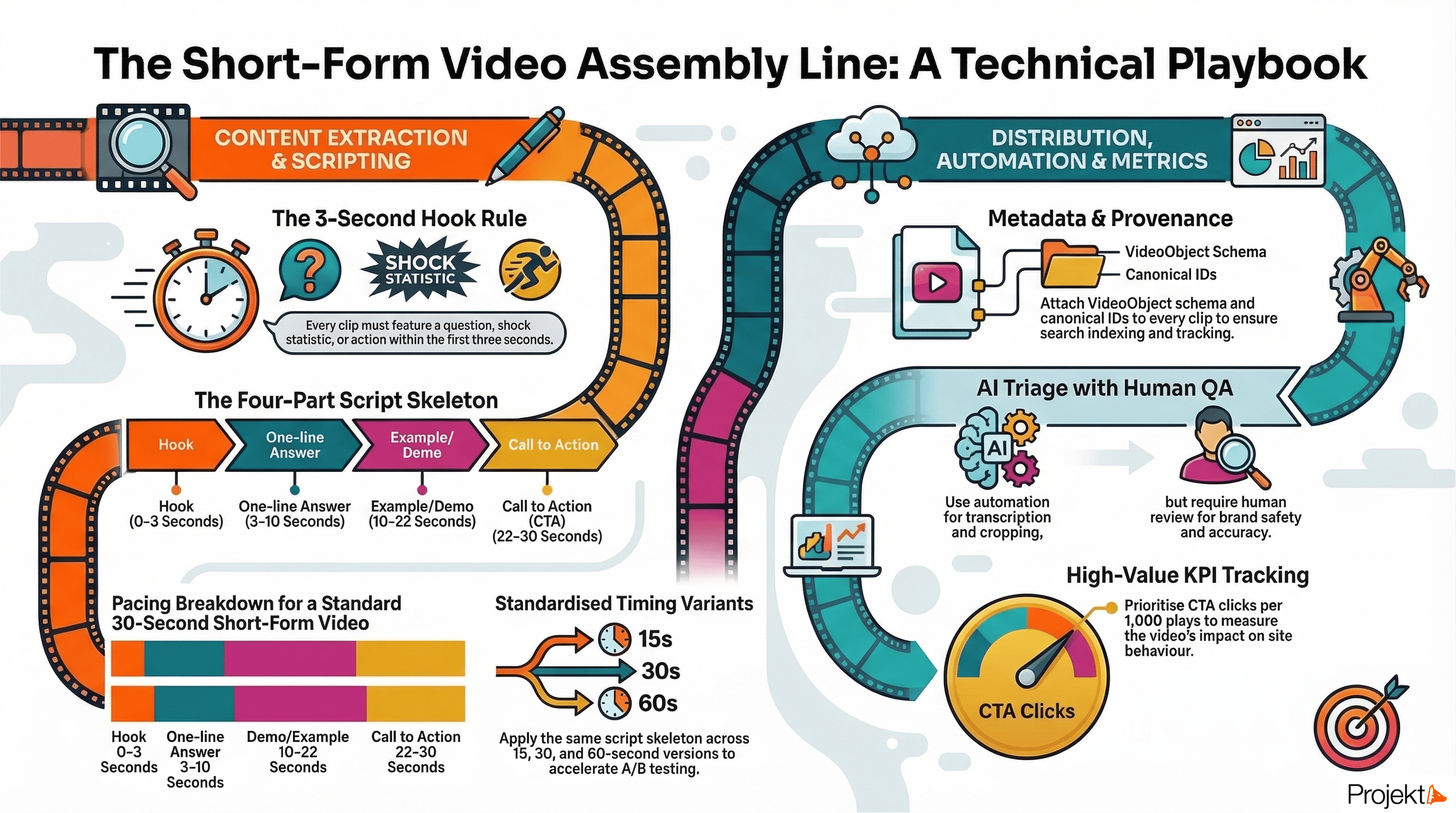
Short-Form Video Workflow
Build a repeatable system for faster, smarter video output.
A strong short-form workflow moves from clip selection and scripting to publishing, automation, and measurement. It replaces scattered effort with a practical process so each video becomes easier to create, easier to improve, and easier to connect back to source content.
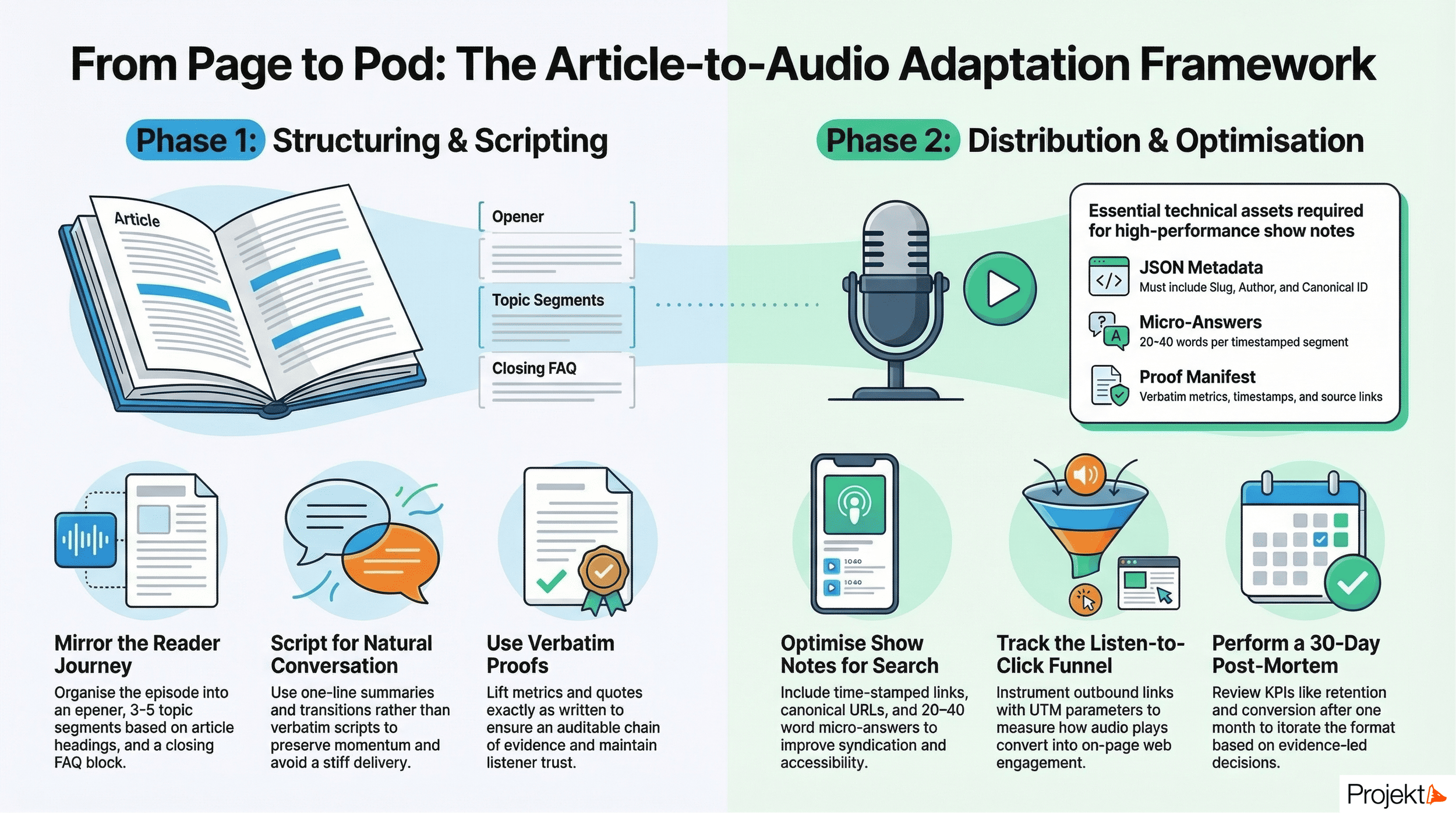
Article-to-Audio Strategy
Turn written content into useful, discoverable audio assets.
Article-to-audio strategy repurposes strong written content into podcast-style episodes, spoken explainers, and structured audio. With clear segments, timestamps, summaries, and source links, existing articles can reach new audiences while keeping context, accuracy, and discoverability intact.
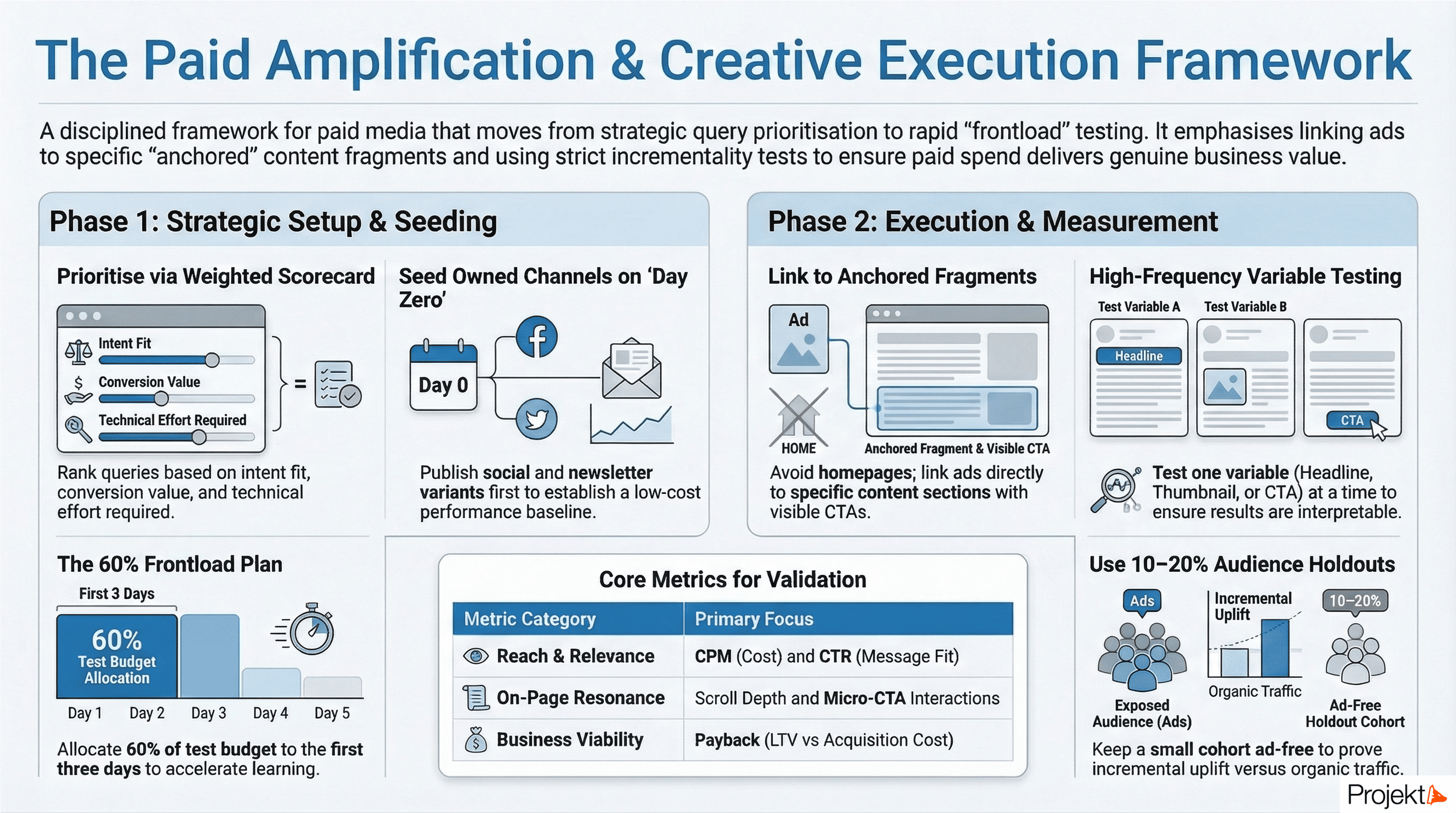
Paid Ad Testing
Replace guesswork with a clearer framework for ad performance.
Paid ad testing works best when ideas are scored, experiments are controlled, and results are measured against real outcomes. A more structured process helps reduce wasted spend, improve learning speed, and turn ad activity into a repeatable growth system.
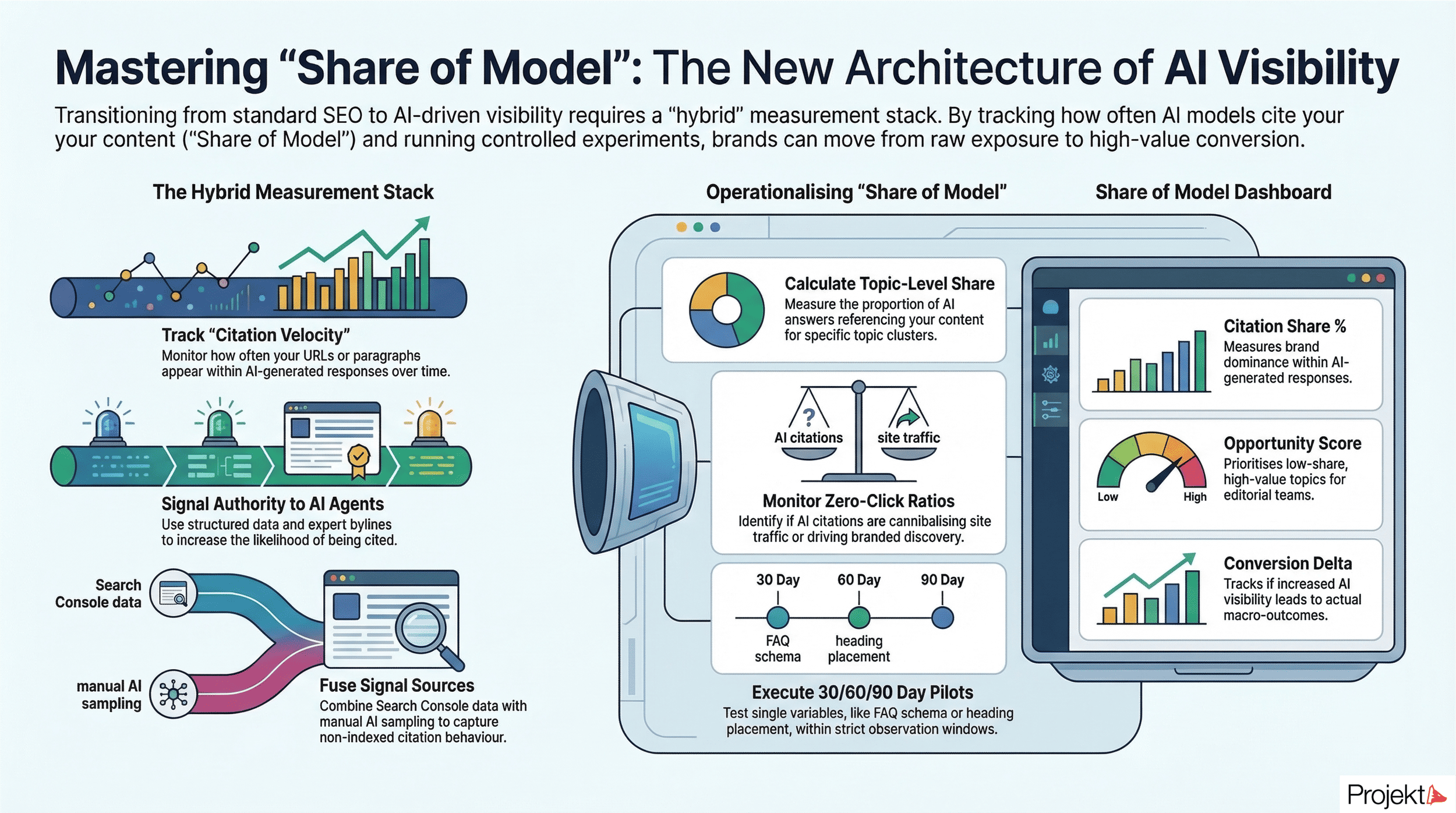
AEO Measurement
Track visibility where clicks no longer tell the full story.
AEO measurement shifts focus from traffic alone to citations, answer ownership, share of model, and extraction signals. It helps content teams understand how pages perform across AI and answer environments where influence can grow even when traditional click data falls short.
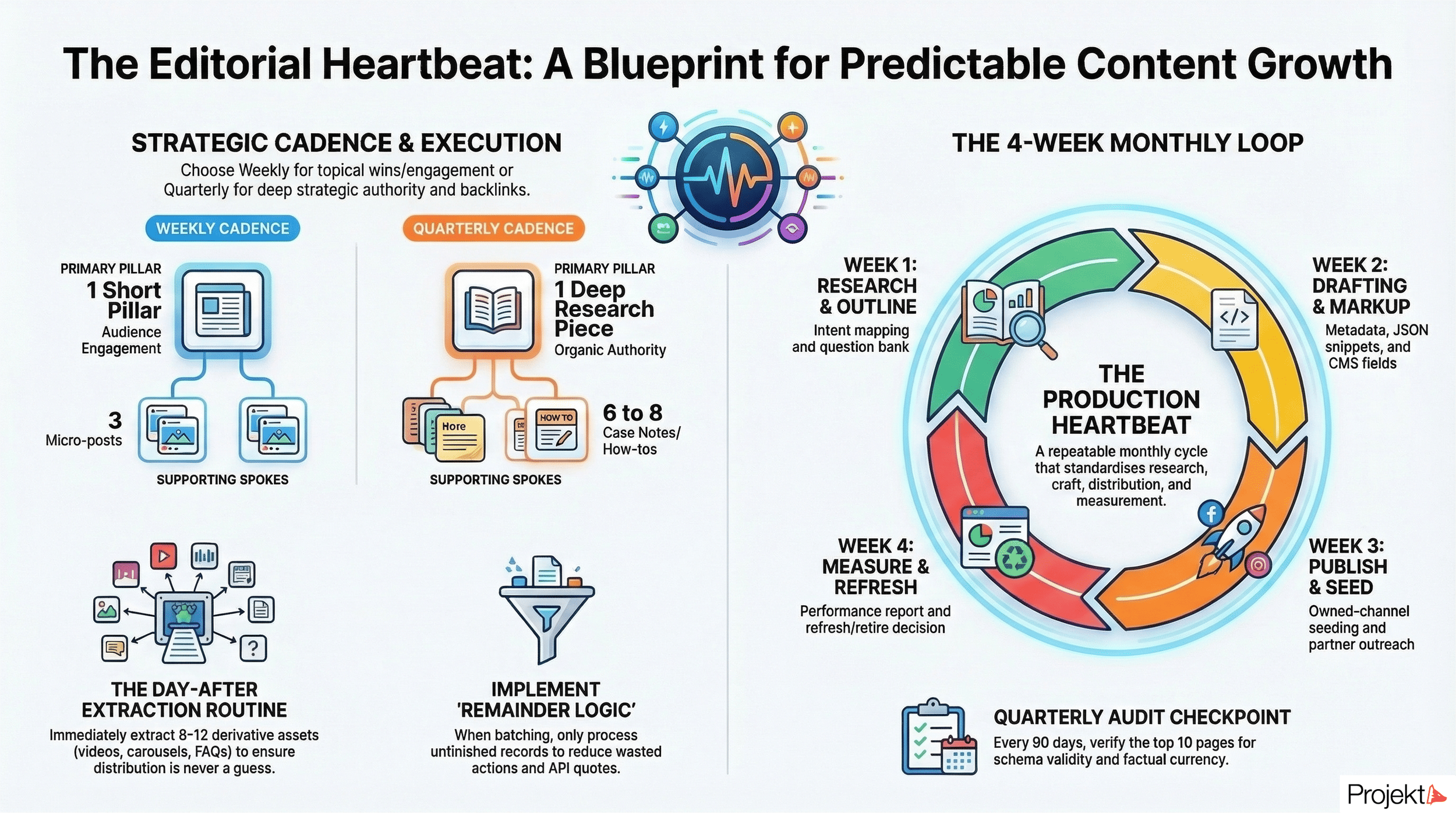
Editorial Cadence
Turn content chaos into a steadier rhythm of growth.
Editorial cadence creates a reliable publishing heartbeat that supports planning, distribution, reuse, and review. With clearer routines, teams can reduce burnout, improve consistency, and build a more predictable content engine that grows stronger with each cycle.
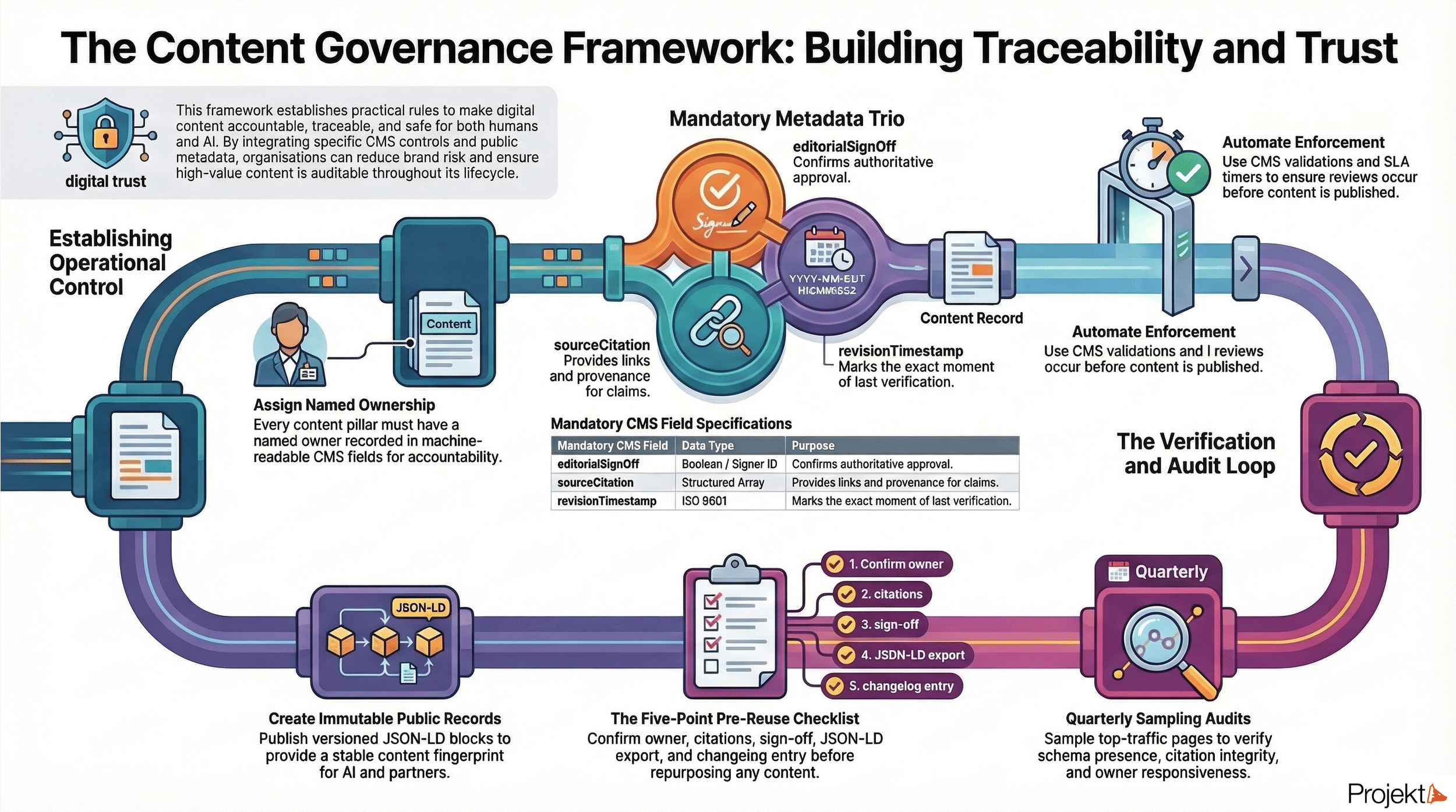
Content Governance
Make content safer, traceable, and easier to trust.
Content governance introduces ownership, sign-off, citation trails, and revision history so content stays accountable over time. It helps teams reduce risk, preserve trust, and create a clearer operational record for publishing, reuse, and high-stakes updates.
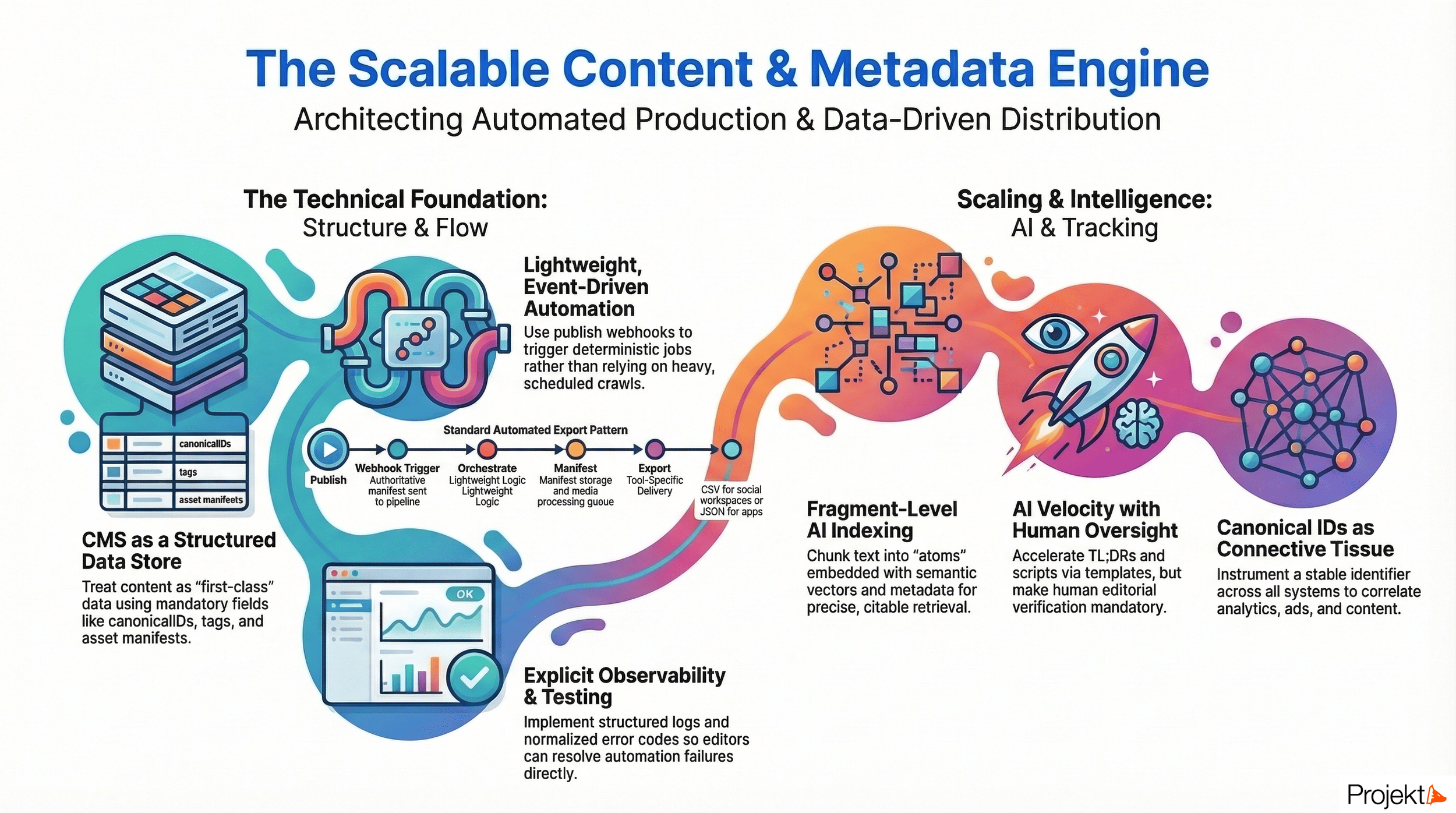
Scalable Content Systems
Build a content engine designed for automation and control.
Scalable content systems treat content as structured data, move it through connected workflows, and support AI-assisted output with human oversight. This creates a stronger foundation for reuse, traceability, retrieval, and growth without losing quality or governance.
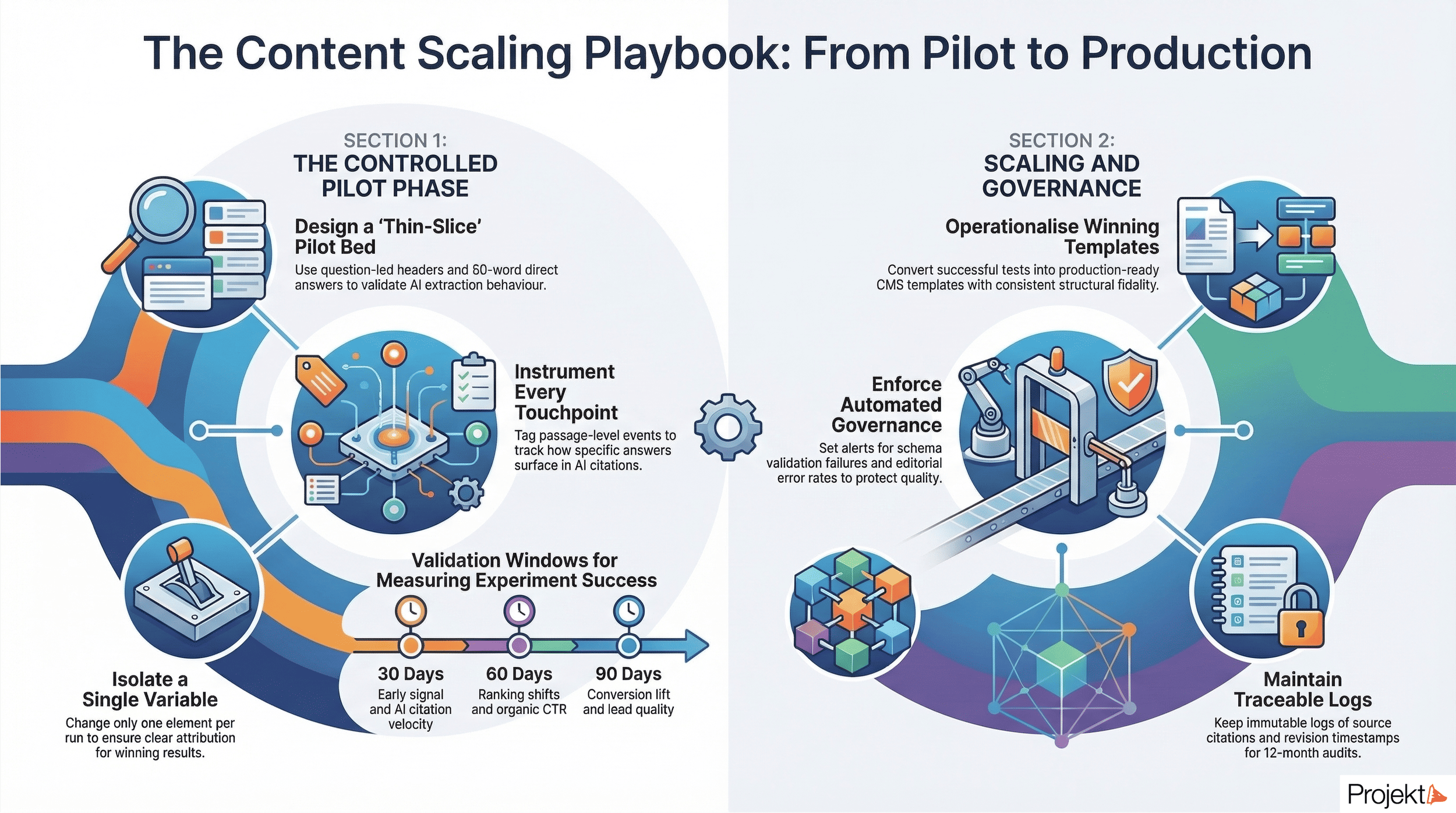
Experimentation Engine
Test content with more rigour and scale what actually works.
An experimentation engine turns content improvement into a disciplined process built on hypotheses, controlled pilots, and measured outcomes. Instead of relying on one-off guesses, teams can validate ideas, document wins, and apply proven patterns more confidently.
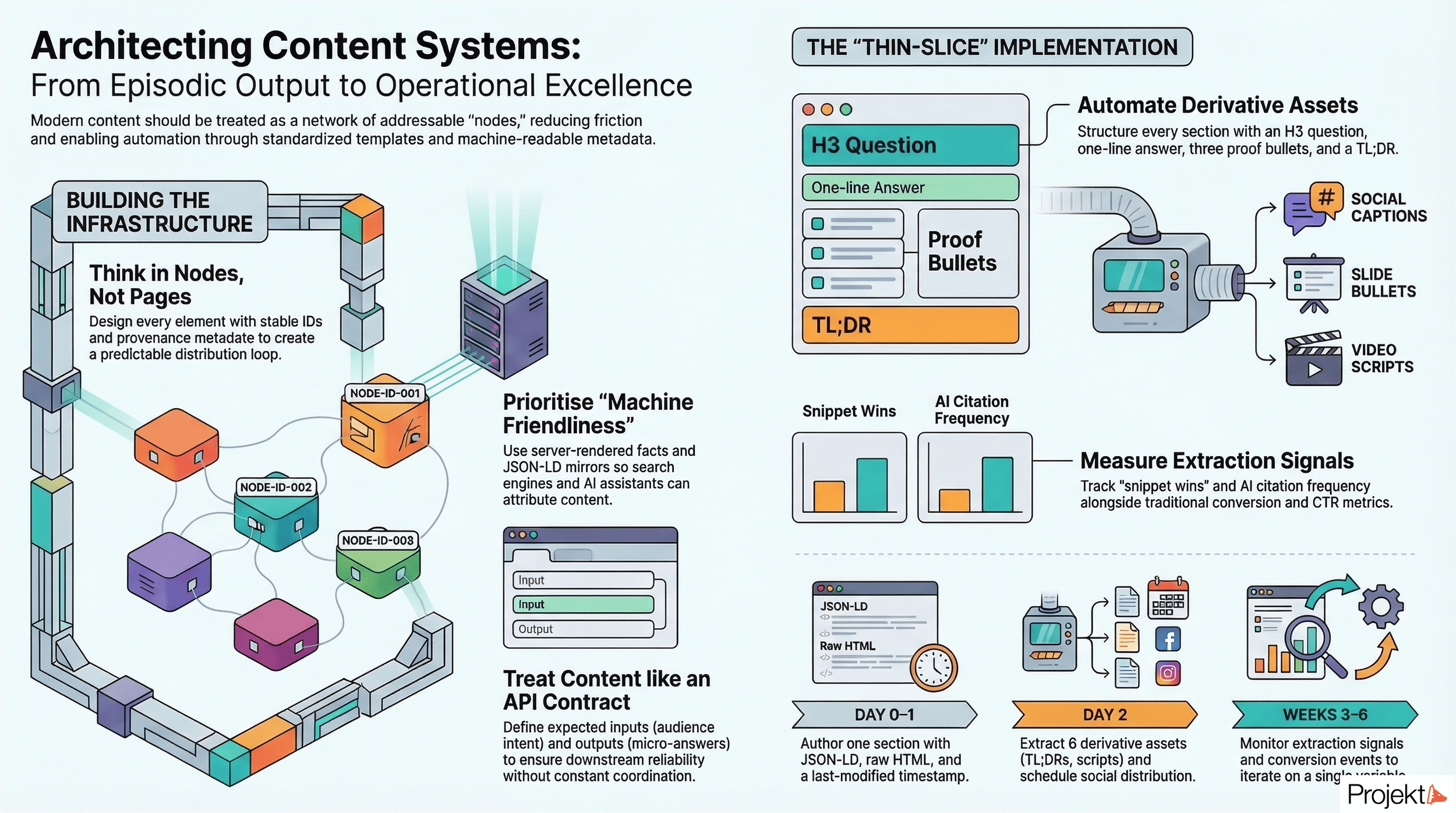
Content as Infrastructure
Build durable content assets instead of disposable output.
Content as infrastructure treats every page, answer, and section as part of a wider system designed for reuse, automation, and long-term value. It shifts focus away from short-lived publishing cycles and toward content that compounds across search, AI, and distribution.
The Effect.
When the underlying page is structured with more intent, the wider content system becomes easier to operate. Search performance becomes less dependent on guesswork, answer visibility becomes easier to support, and repurposed outputs stay closer to the original meaning instead of drifting across channels.
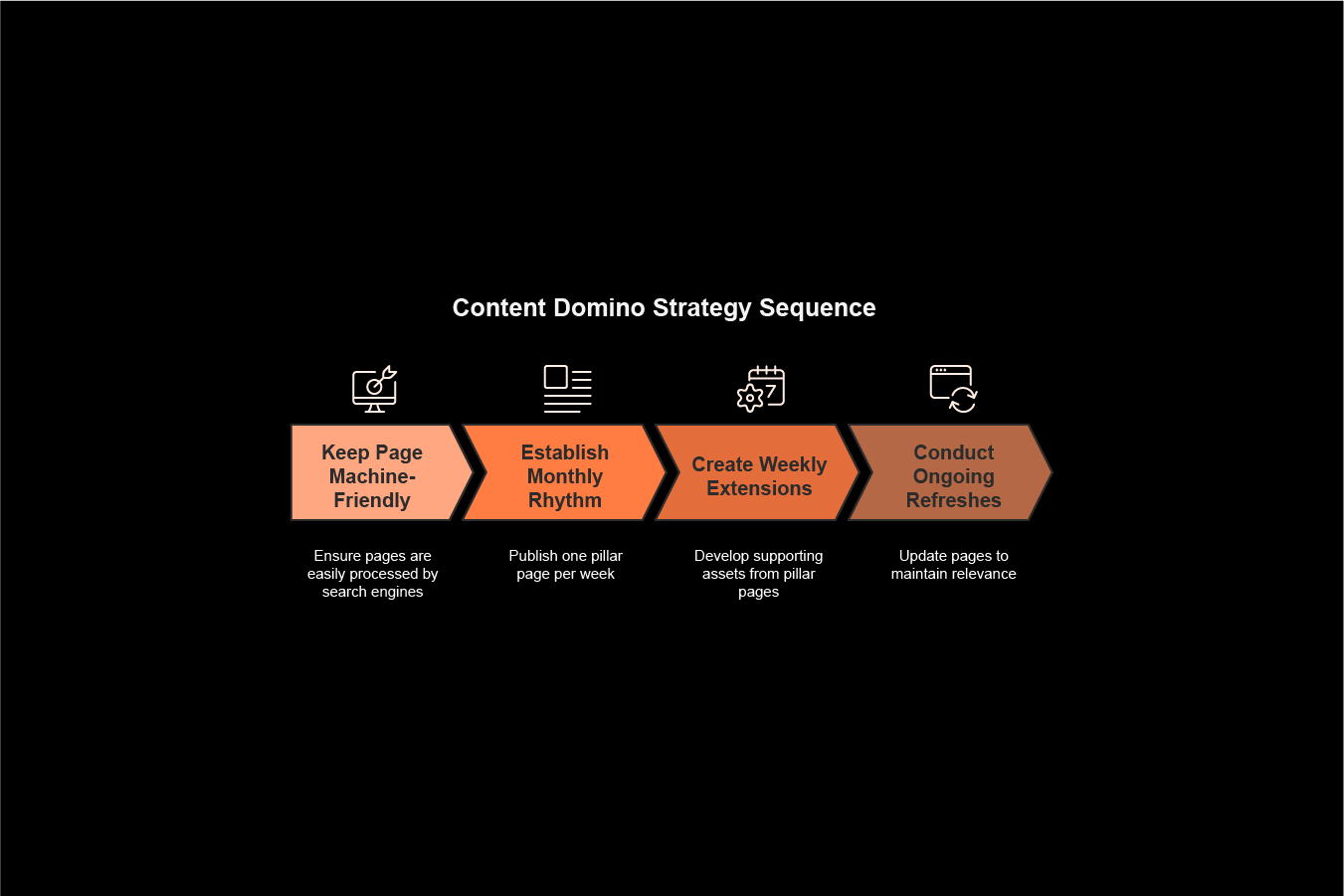
That creates practical advantages at several levels. Teams get a clearer source to build from. Reuse becomes faster because sections are easier to extract and adapt. Updates become more manageable because the core information sits in a stronger central asset. Measurement also improves, because it becomes easier to trace how one page supports visibility, distribution, engagement, and follow-on activity across different surfaces.
The overall effect is a more connected publishing rhythm: less fragmentation, more consistency, and a stronger relationship between content work and downstream value.
What this logic delivers.
-
Logic is a connected content approach built around stronger source pages, clearer structure, better reuse, and more measurable distribution. It is designed to help one core article support broader visibility and more consistent outputs across multiple channels.
-
It addresses the inefficiency of creating disconnected content for every platform. Instead of restarting each time, it strengthens the original page so more outputs can be developed from a clearer and more reliable foundation.
-
No. Search is one part of it, but the wider aim is to support search visibility, answer discovery, repurposing, attribution, paid promotion, and ongoing content operations from the same central source.
-
Because the source page shapes everything that follows. When it is clearer, better structured, and easier to interpret, it becomes far easier to reuse sections, maintain accuracy, and keep outputs aligned across different formats.
-
It encourages content to be structured in ways that are easier for machines to parse, interpret, and reference. That includes clearer questions, direct answers, better markup, and stronger consistency between visible content and supporting data.
-
Yes. A well-built article can support a range of derivative assets, including social posts, short-form video ideas, audio segments, FAQs, creative testing inputs, and other reusable content units.
-
No. Automation can support the process, but Logic starts with structure and clarity. It is about creating a better operating model first, then using tools where they genuinely reduce friction and support scale.
-
It keeps more outputs tied back to a stronger central source. That reduces duplication, limits message drift, and makes it easier for teams to update information without losing alignment across channels.
-
Yes. When content is more structured and source-led, it becomes easier to connect outputs back to the original page and assess how that page contributes to visibility, reuse, engagement, and downstream activity.
-
It is suited to businesses, publishers, and teams that want a more organised way to create, structure, distribute, and maintain content without relying on fragmented one-off workflows.