
Search-Ready Content
Build pages that rank clearly, answer quickly, and travel further.
Modern SEO is no longer just about visibility in a list of links. It is about structuring content so search engines can understand it, users can act on it, and answer systems can extract it with confidence.
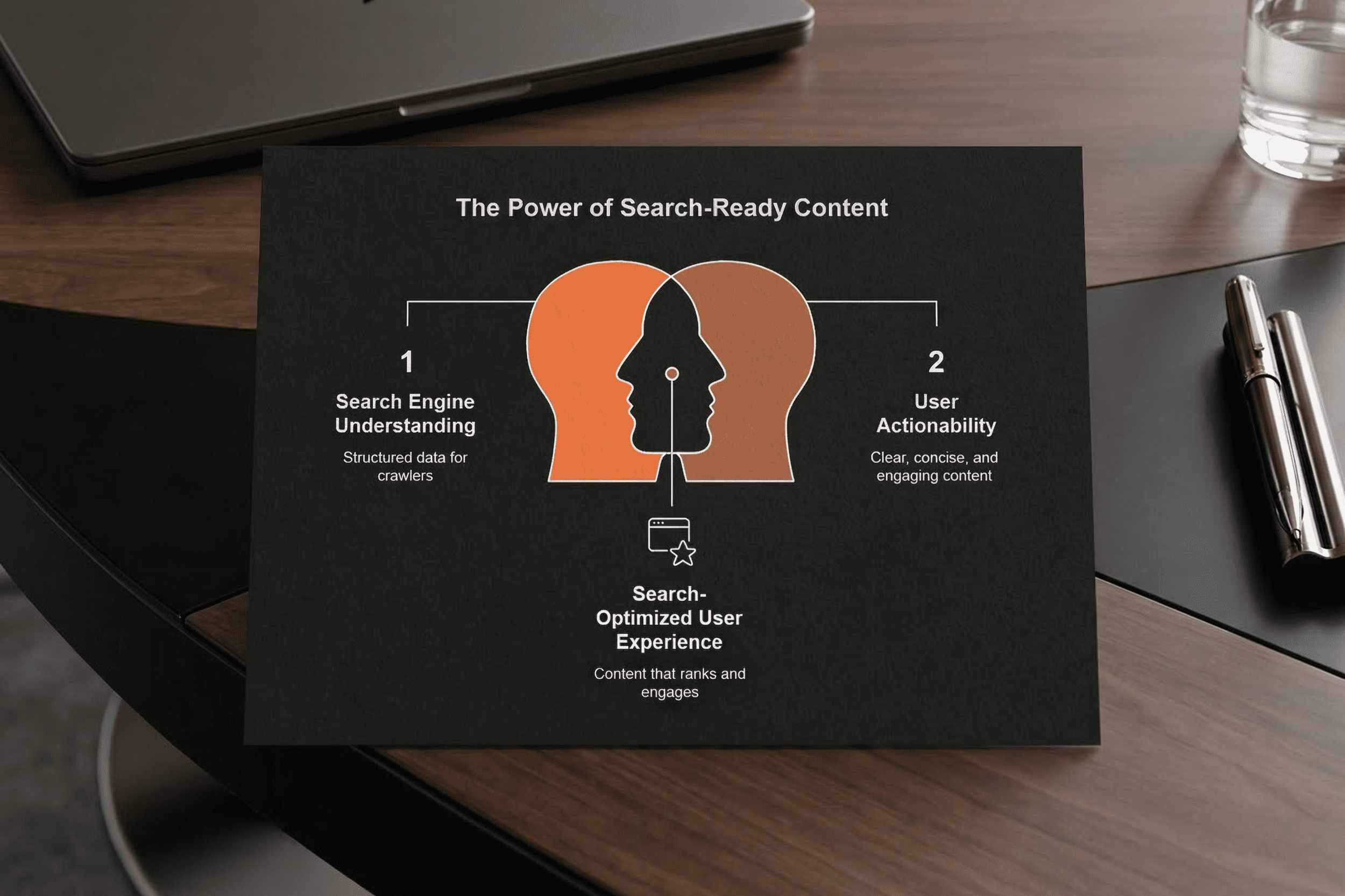
The Power of Search-Ready Content
1. Search Engine Understanding - Structured data for crawlers
2. User Actionability - Clear, concise, and engaging content
Search-Optimised User Experience - Content that ranks and engages
Start with intent, not formatting.
Better SEO begins before the first sentence is written.
Strong search content is planned around what the reader wants to know and what they need to do next. Instead of writing broad pages and hoping they rank, start by identifying the questions behind the query and assign those questions to the sections that will answer them.
Map user questions to real sections
Use site search, support tickets, sales conversations, analytics, and search query patterns to understand what people are actually asking. Group those questions by intent, then assign one primary question to each section.
Prioritise by value, not volume alone
A high-volume query is useful, but a high-intent query tied to business value is often more important. The strongest pages answer questions that sit close to decisions, actions, and commercial outcomes.
Reduce friction for the writer and the reader
When every section already has a defined purpose, drafting becomes easier. The page moves with more logic, and the reader can find answers without working through unnecessary copy.
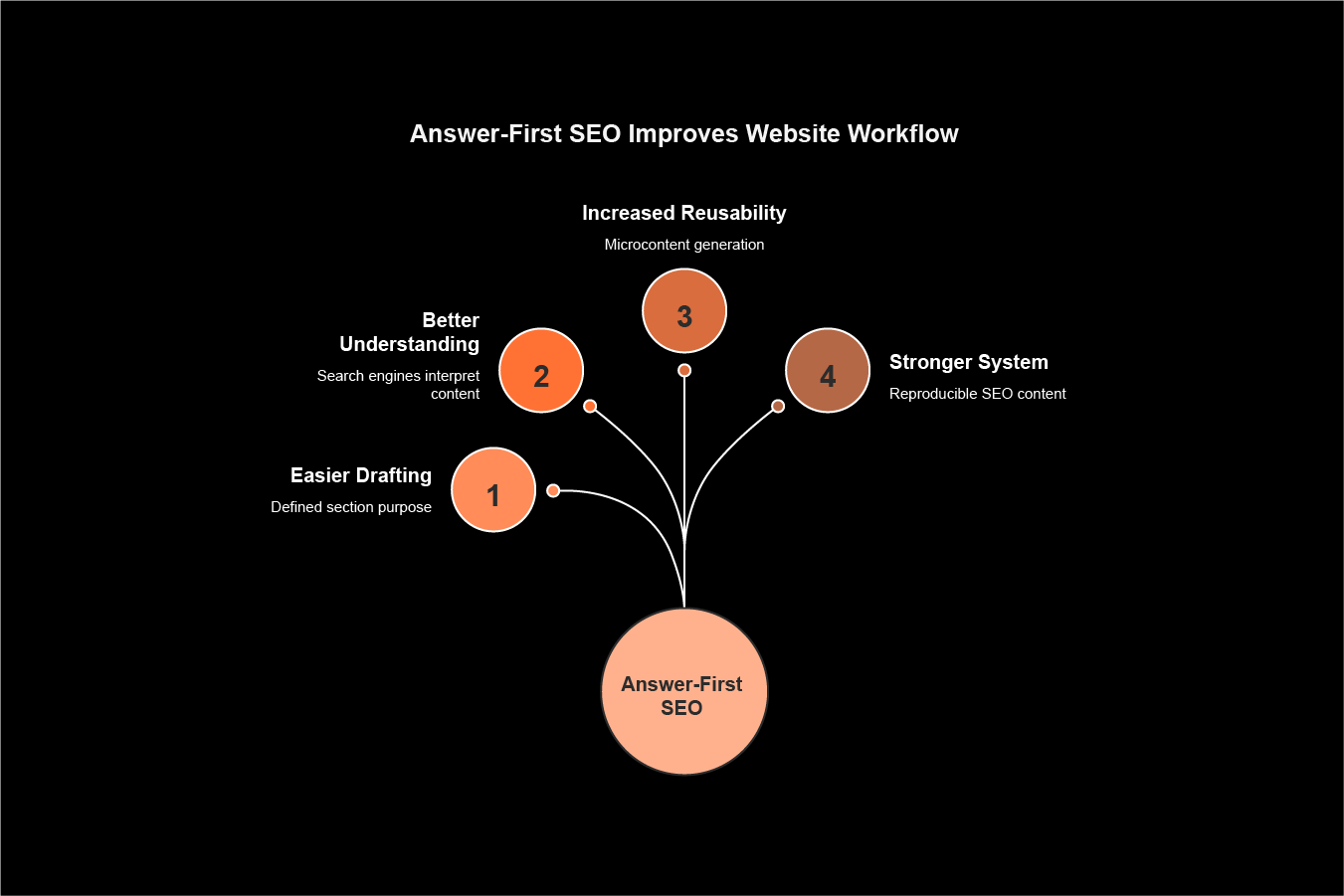
Answer-First SEO Improves Website Workflow
1. Easier Drafting - Defined section purpose
2. Better Understanding - Search engines interpret content
3. Increased Reusability - Microcontent generation
4. Stronger System - Reproducible SEO content
Answer-First SEO
Turn headings into search signals.
Each section should resolve a real question clearly.
Search performance improves when the page is organised around clean, extractable units of meaning. That means headings need to do more than break up the layout. They need to frame the problem and prepare the answer.
Question-led headings work harder
A clear H2 or H3 gives search engines a better understanding of the topic of the section and helps users scan the page faster.
Direct answers should appear first
The first sentence beneath a heading should answer the question immediately. That makes the section easier to quote, easier to understand, and easier to reuse across search features and other content formats.
Structure supports clarity
Lists, tables, bullets, and short steps make the answer more accessible and more extractable. This helps both traditional search and newer answer-led discovery surfaces.
Strong SEO pages should also be reusable.
A good section does not stop working once the article is published.
When a section is written cleanly, it can support more than ranking alone. It can also feed other outputs without needing a separate rewrite.
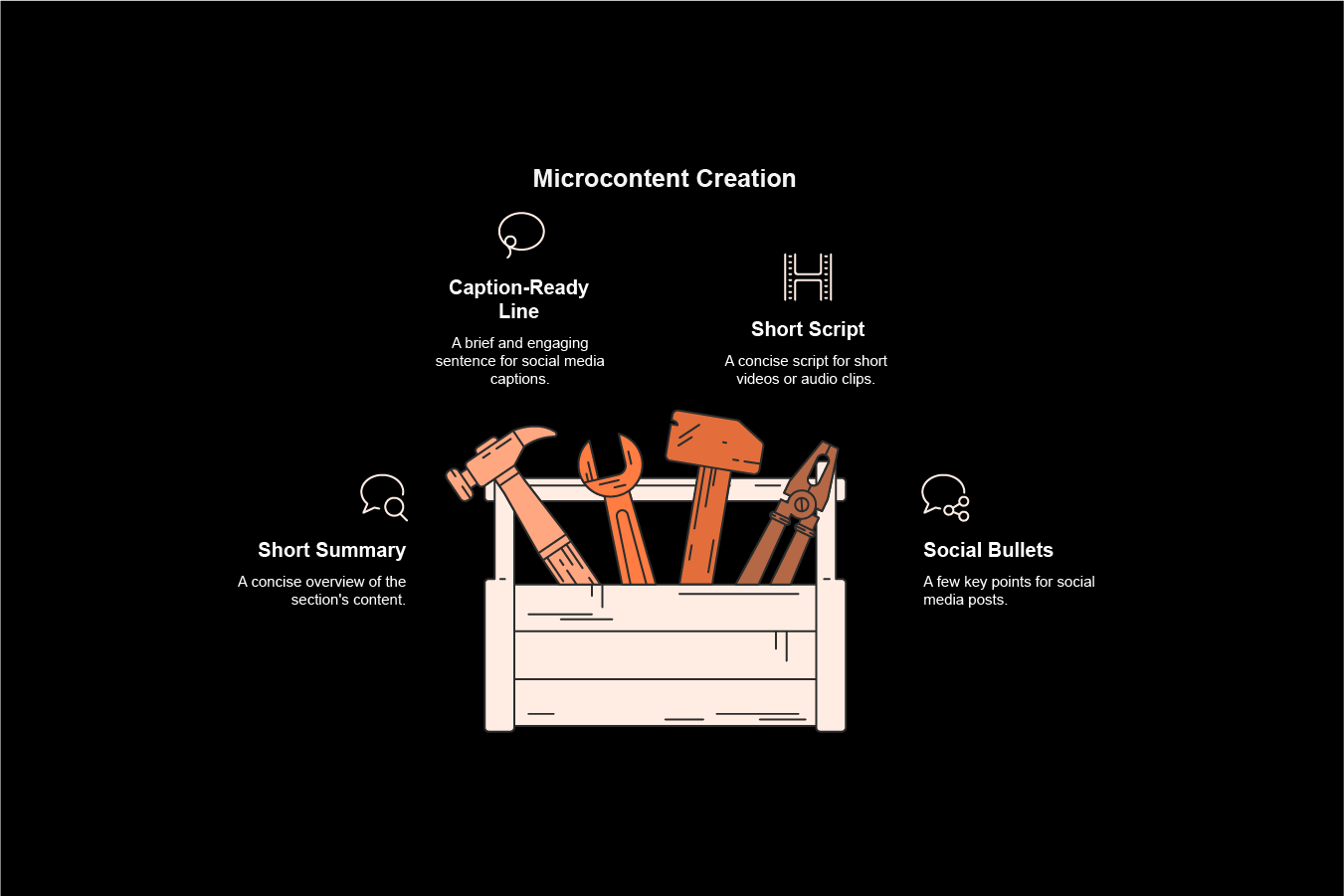
Microcontent Creation
Short Summary - A concise overview of the section's content.
Caption-Ready Line - A brief and engaging sentence for social media captions.
Short Script - A concise script for short videos or audio clips.
Social Bullets - A few key points for social media posts.
Create microcontent while drafting.
A section can generate a short summary, a caption-ready line, a short script, and a few social bullets without requiring new research. That saves time later and keeps the message consistent.
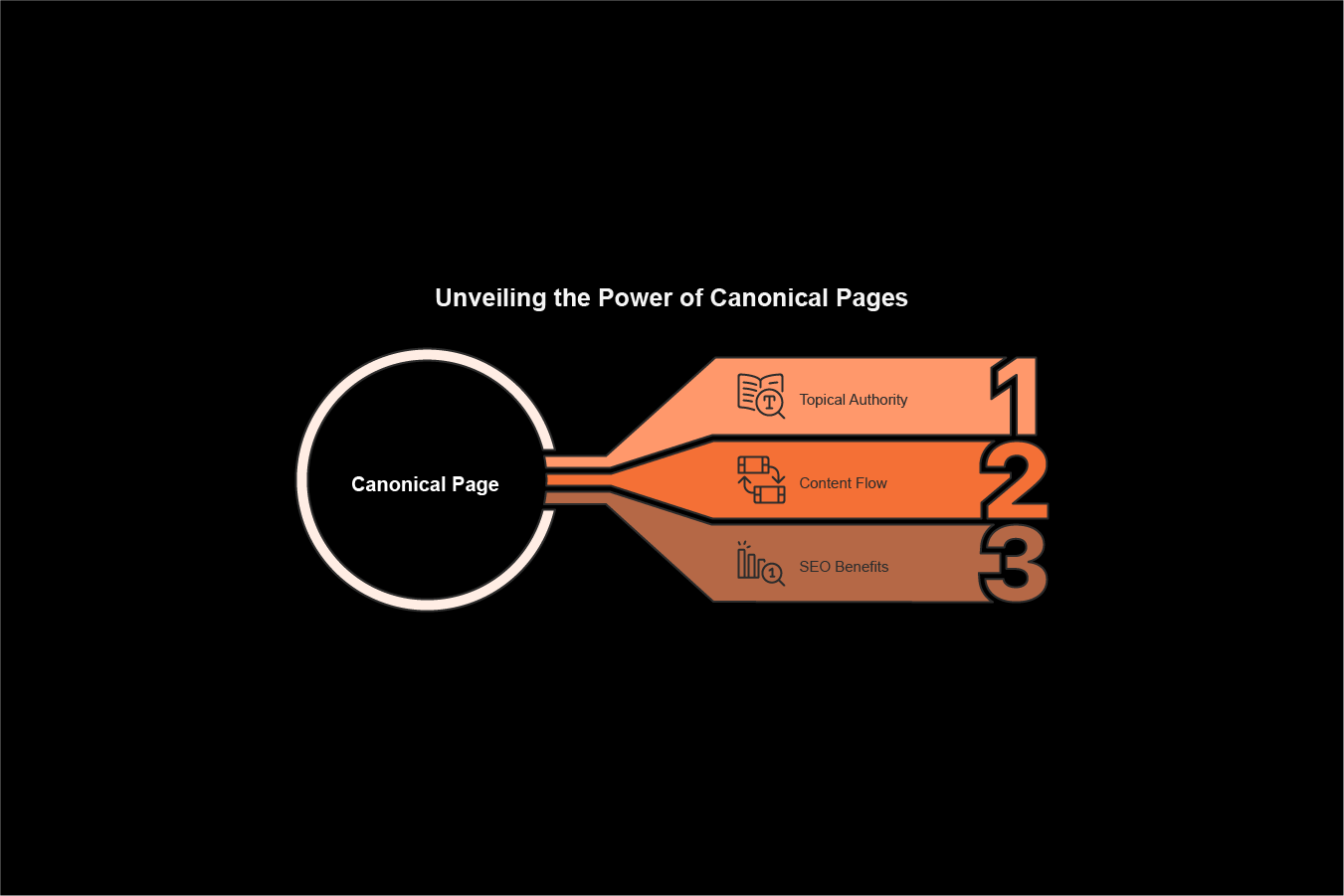
Unveiling the Power of Canonical Pages
Canonical Page
1. Topical Authority
2. Content Flow
3. SEO Benefits
Keep the canonical page central.
All derivative content should flow back to the original article. That reinforces the page as the main source and keeps topical authority concentrated rather than scattered.
Metadata and schema shape discoverability.
Search engines need more than words. They need clean signals.
SEO performance is influenced not only by the copy on the page, but also by the way the page is described, marked up, and made accessible.
Title and H1 should align.
The title tag, H1, and page purpose should point in the same direction. Mixed signals weaken clarity. A focused title and matching heading help the page express its intent clearly.
Meta descriptions still help context.
A concise meta description supports click-through and gives a clearer summary of what the page resolves. It should state the problem, the answer direction, and the action.
Schema helps define structure.
FAQPage, HowTo, and Article schema can all help clarify content type and improve extractability. When used correctly, they support better parsing for both search and answer surfaces.
Freshness matters.
Visible last-modified dates, updated data, and current examples all help keep the page credible. Search systems increasingly reward pages that remain active and maintained.
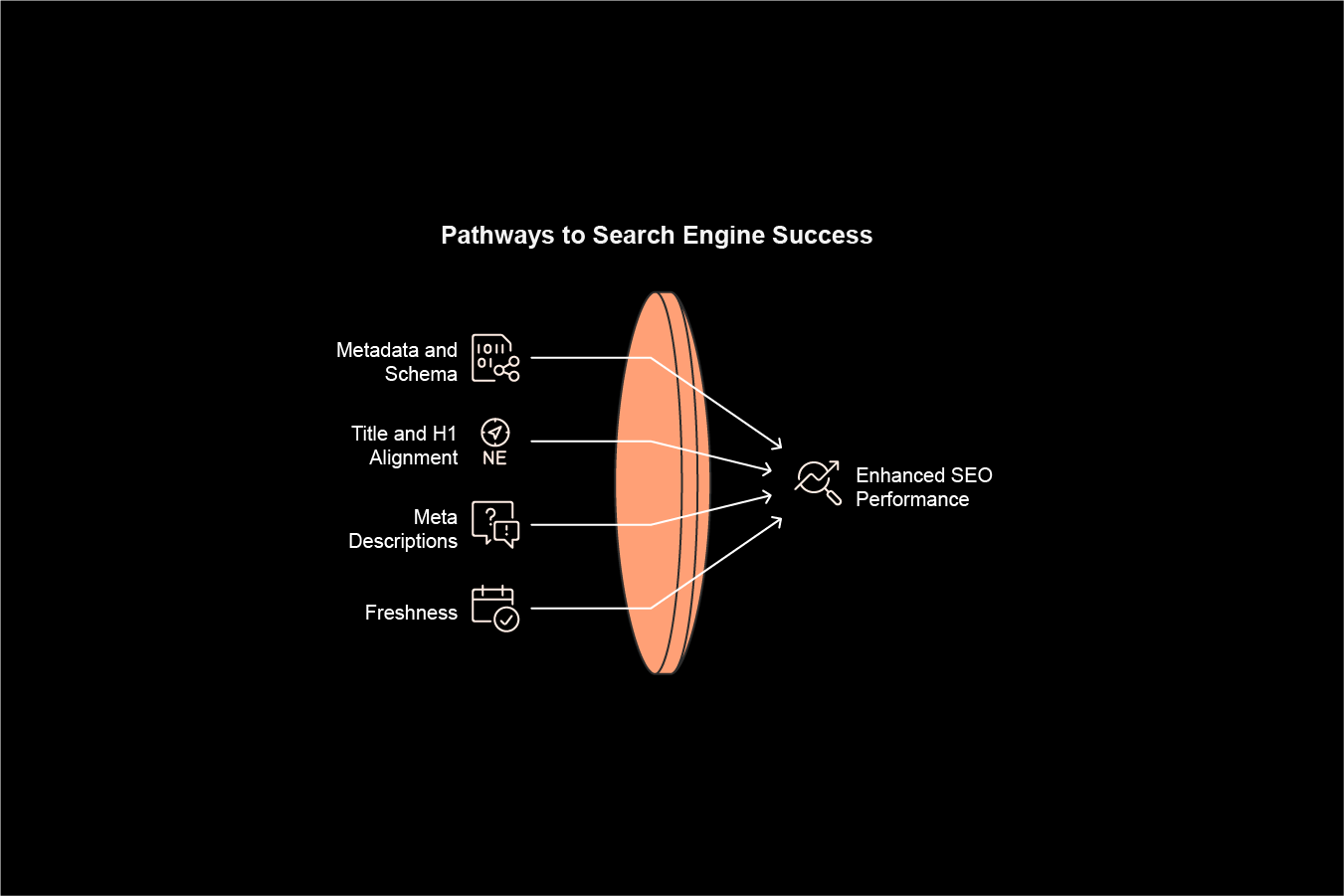
Pathways to Search Engine Success
Metadata and Schema
Title and H1 Alignment
Meta Descriptions
Freshness
Enhanced SEO Performance
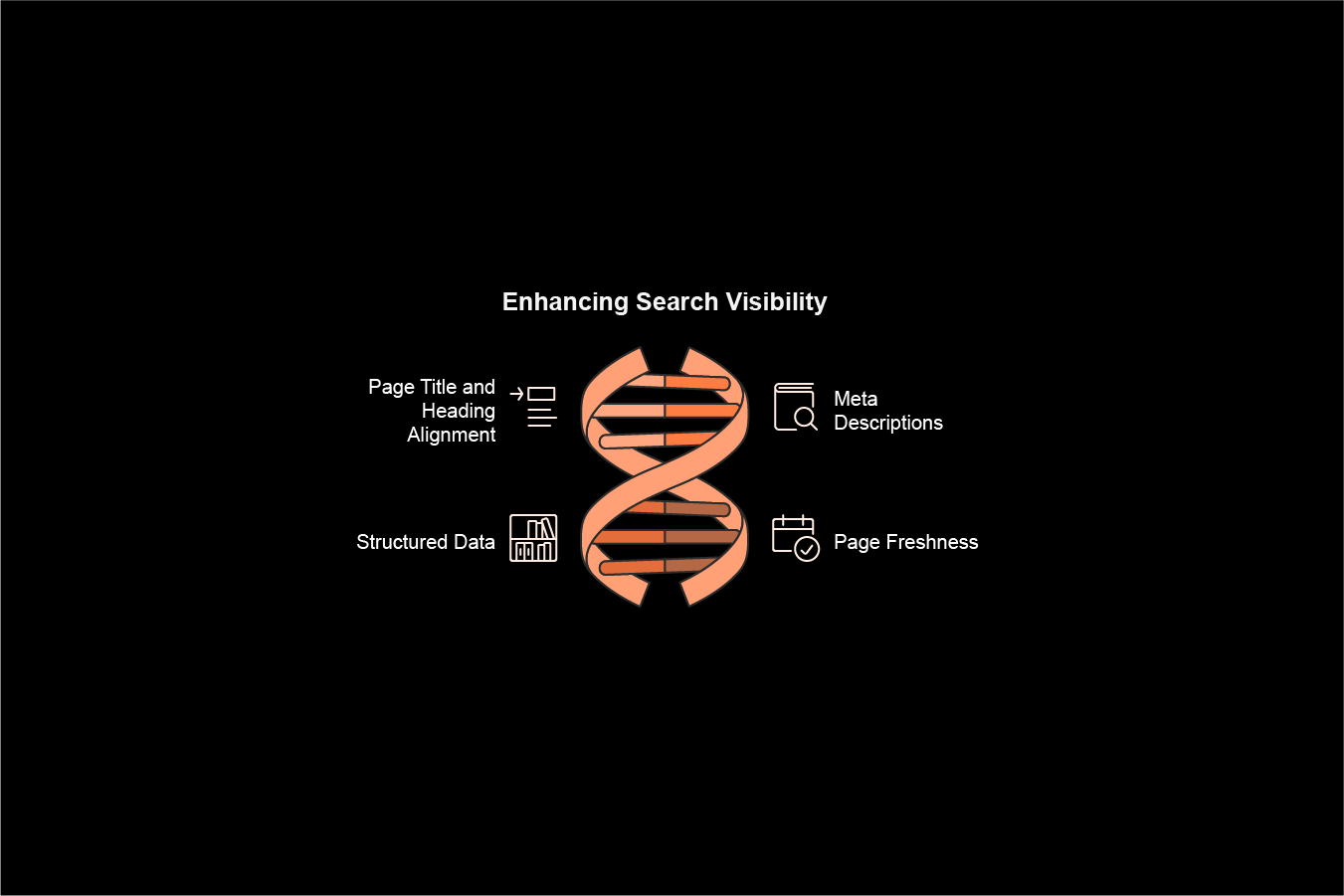
Enhancing Search Visibility
Page Title and Heading Alignment
Structured Data
Meta Descriptions
Page Freshness
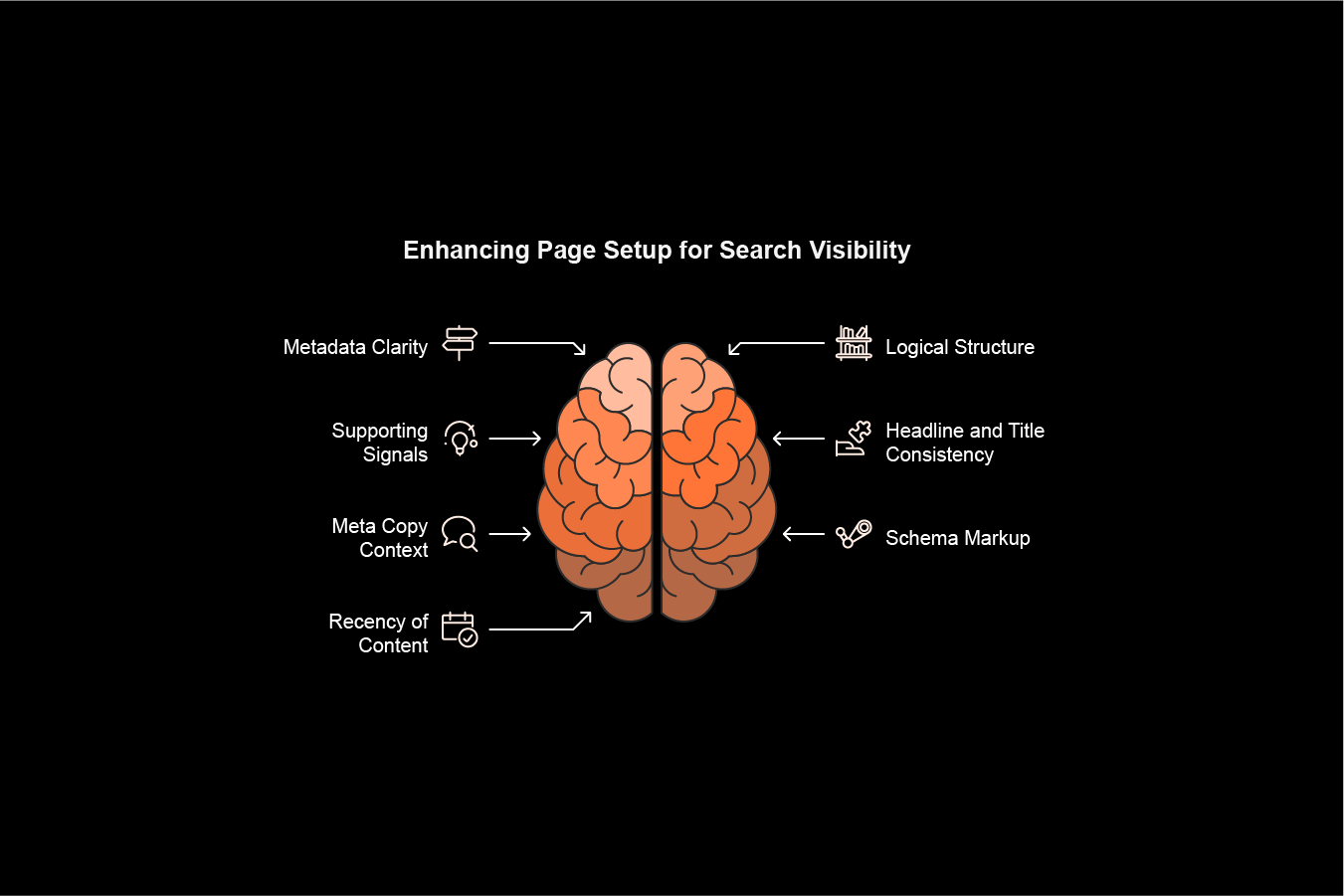
Enhancing Page Setup for Search Visibility
Metadata Clarity
Supporting Signals
Meta Copy Context
Recency of Content
Logical Structure
Headline and Title Consistency
Schema Markup
Technical accessibility remains part of SEO.
Even strong content underperforms when core answers are difficult to read or retrieve.
The page should be accessible not only to visitors, but also to crawlers and retrieval systems.
Core answer blocks should be available in HTML.
Important content should not depend on scripts, hidden tabs, or interactions just to be seen.
Semantic structure matters.
Headings, lists, and tables create clearer boundaries between ideas and improve parseability.
Performance still counts.
Fast response times, mobile usability, and stable page delivery continue to influence how content is assessed and surfaced.
Canonical control matters.
Pages should present one clear source URL to avoid duplication and dilution.
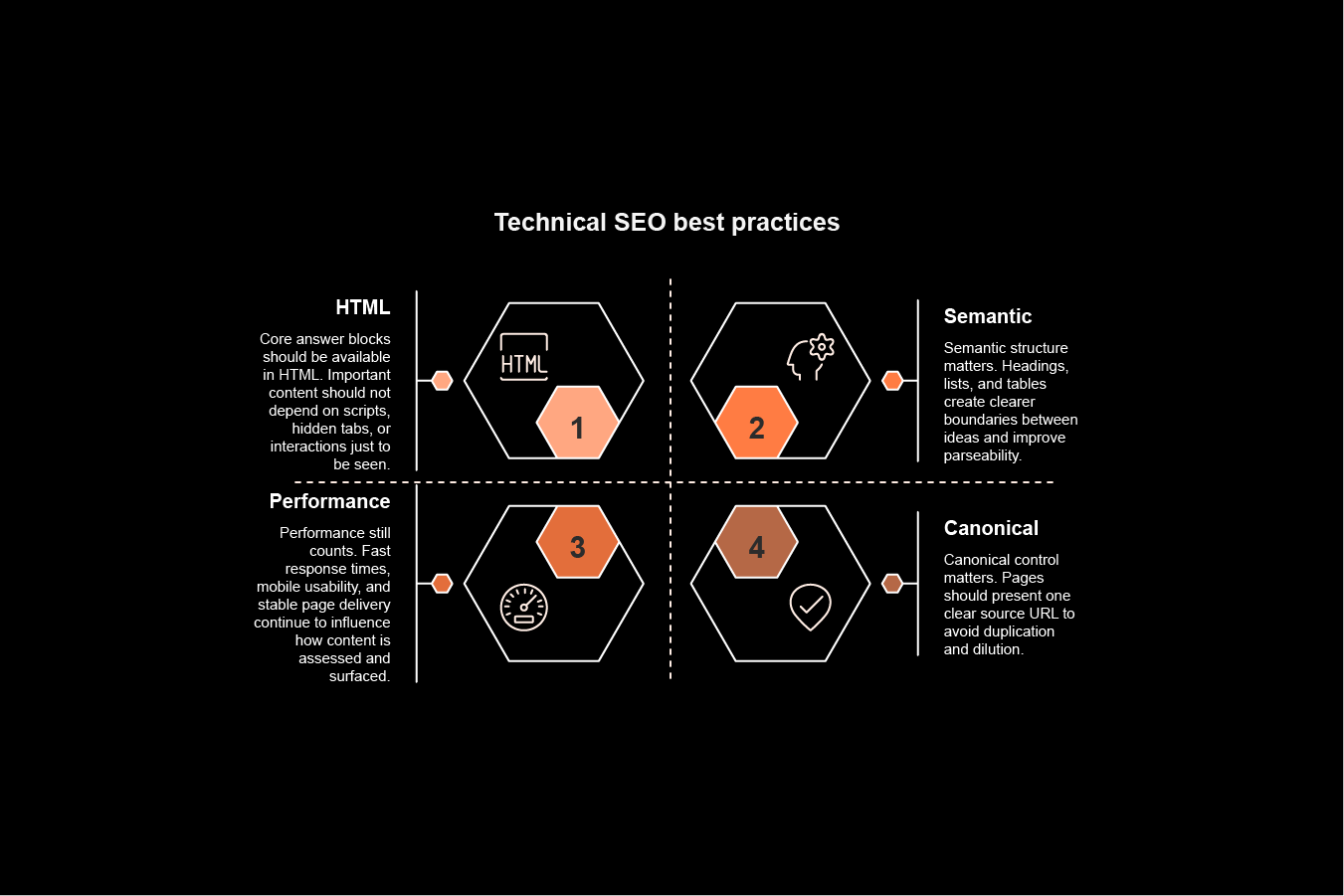
Technical SEO Best Practices
1. HTML - Core answer blocks should be available in HTML. Important content should not depend on scripts, hidden tabs, or interactions just to be seen.
2. Semantic - Semantic structure matters. Headings, lists, and tables create clearer boundaries between ideas and improve parseability.
3. Performance - Performance still counts. Fast response times, mobile usability, and stable page delivery continue to influence how content is assessed and surfaced.
4. Canonical - Canonical control matters. Pages should present one clear source URL to avoid duplication and dilution.
Create a production rhythm that can repeat.

SEO Content Creation Process
Research - Gather questions, queries, source material, and supporting evidence
Draft - Write in an answer-first structure using question-led headings
Expand - Add proof, examples, FAQs, metadata, and structured markup
Publish - Deploy the page with clean HTML, aligned metadata, clear authorship, and visible freshness signals
Monitor - Review search visibility, extractability, citation presence, and downstream conversions
SEO content performs better when the workflow is governed, not improvised.
A page should move through a clear creation cycle that supports both quality and scale.
Research - Gather questions, queries, source material, and supporting evidence.
Draft - Write in an answer-first structure using question-led headings and short, extractable sections.
Expand - Add proof, examples, FAQs, metadata, and structured markup.
Publish - Deploy the page with clean HTML, aligned metadata, clear authorship, and visible freshness signals.
Monitor - Review search visibility, extractability, citation presence, and downstream conversions.
This turns SEO content into a reproducible system rather than a one-off writing exercise.
Measure pages by usefulness, not traffic alone.

Key SEO Performance Indicators
1. Usefulness - Measure pages by how effectively they answer, attract, and assist users.
2. Traditional Metrics - Track impressions, rankings, click-through rate, sessions, and conversions.
3. Search Feature Visibility - Measure featured snippet appearances, People Also Ask coverage, and extractable answer presence.
Ranking matters, but it is no longer the only signal of success.
Modern SEO pages should be measured by how effectively they answer, attract, and assist.
Traditional metrics still matter
Track impressions, rankings, click-through rate, sessions, and conversions.
Search feature visibility matters too
Measure featured snippet appearances, People Also Ask coverage, and extractable answer presence where available.
Brand lift matters
Look for branded search increases, assisted conversions, and broader discovery patterns that follow stronger answer-led content.
Citation-led visibility matters
As search becomes more answer-driven, being surfaced as a usable source becomes a meaningful performance indicator alongside clicks.
Why this works now.
Search engines reward content that is easier to interpret, not just longer to publish.
The most useful pages are increasingly the ones that resolve intent clearly, show proof quickly, and maintain strong structural signals. That means better SEO is not only about finding keywords. It is about organising information so each section serves a real question and the whole page becomes easier to rank, easier to trust, and easier to reuse.
-
It is a content structure where each section begins with a direct answer to a question-style heading, followed by supporting explanation, proof, and next steps.
-
A practical range is around 40 to 60 words. That is long enough to communicate substance but short enough to stay extractable and clear.
-
They help both readers and search systems understand the exact purpose of the section and make the page easier to scan and retrieve.
-
Article is a solid base type, with FAQPage and HowTo added where the content genuinely supports those formats.
-
No. It strengthens it. Technical SEO, authority, crawlability, and page health still matter. This structure simply improves how content is organised and interpreted.
-
Start with rankings, impressions, CTR, conversions, and search feature appearances. Then expand into extractability, snippet coverage, and related visibility signals.
-
Yes. The repeatable section blueprint makes it easier to update top pages first, then extend the same model across the wider site over time.
“The strongest SEO pages are not just written to be found, they are structured to be understood”
Search performance improves when clarity is built into the page from the start. That means mapping intent properly, answering questions directly, supporting claims with evidence, and publishing content in a format that search systems can interpret without friction. Over time, that produces not just stronger pages, but a stronger content system.
Read each of these dedicated articles for greater insight:





Long read