
Access ends in:
Blog articles as the first domino:
Building the foundation for SEO, AEO, consistent content, paid advertising, partnerships, collaborations, and monetisation through a smarter connected publishing process
A comprehensive breakdown.
76-page breakdown.
Turn one well-structured blog article into your growth engine: a source asset powering SEO, AEO, social, video, podcasts, ads, partnerships, lead generation, and monetisation from one central truth.
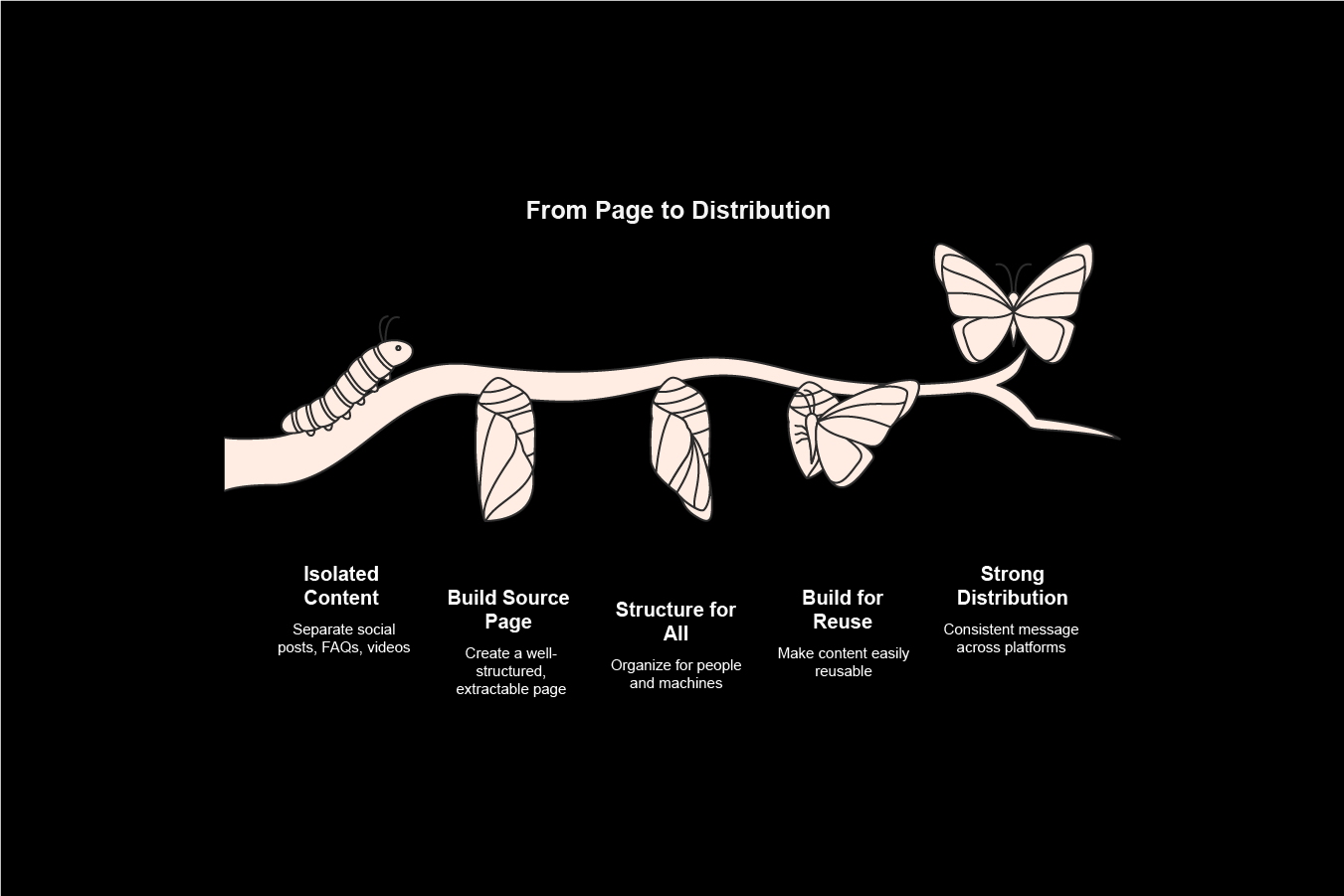
From Page to Distribution
Isolated Content - Separate social posts, FAQs, videos
Build Source Page - Create a well-structured, extractable page
Structure for All - Organise for people and machines
Build for Reuse - Make content easily reusable
Strong Distribution - Consistent message across platforms
Publish consistently and your blog becomes a business asset that builds trust, boosts visibility, fuels promotion, attracts qualified leads, supports conversions, and creates repeatable momentum for stronger long-term sales.

Creating a Repeatable Distribution System
Strong Page - A well-structured long-form article
Short Summaries - Concise recaps of each section
Section Openers - Engaging introductions to each section
Key Points - Compact supporting points within sections
Main Points.
Source:
Single canonical page reduces duplication and centralises updates
Visible byline, publish date and revision history signal provenance
Embed FAQ and micro‑snippets to aid extraction
Structure:
Start with intent mapping and a 40–60 word shortAnswer
Use question‑first headings and stable section IDs
Mirror shortAnswer in JSON‑LD for parity
Repurposing:
Treat each H2/H3 as an atom for social, video and podcast scripts
Store manifests with asset metadata and canonical IDs
Tag derivatives with UTM and section IDs for attribution
Operational:
Validate schema and shortAnswer parity at publish via CI or publish hooks
Ensure server‑rendered answer blocks and target mobile TTFB/LCP thresholds
Automate manifest exports to social and ad pipelines
Measurement:
Track impressions, CTR, AI citation velocity and zero‑click rates
Instrument passage events and build a Share of Model dashboard
Use holdouts for paid incrementality and run controlled experiments
Conclusion.
Think of the blog article as an addressable, versioned data artifact that powers discoverability and downstream creative work: design for machines and humans, store extractable snippets, enforce schema parity and measure passage‑level outcomes. With stable IDs, manifests and lightweight governance you turn publishing into a reproducible engineering rhythm that multiplies returns through reuse, experiments and partnerships.
Catalyst.
Turn one strong article into wider visibility, reusable outputs, and more connected distribution.
Catalyst is built around six connected approaches that help a single source page support search, answer discovery, social distribution, paid promotion, and monetisation. Instead of creating disconnected content for each channel, it starts with a stronger page and extends that value into repeatable outputs that are easier to manage, test, and scale.
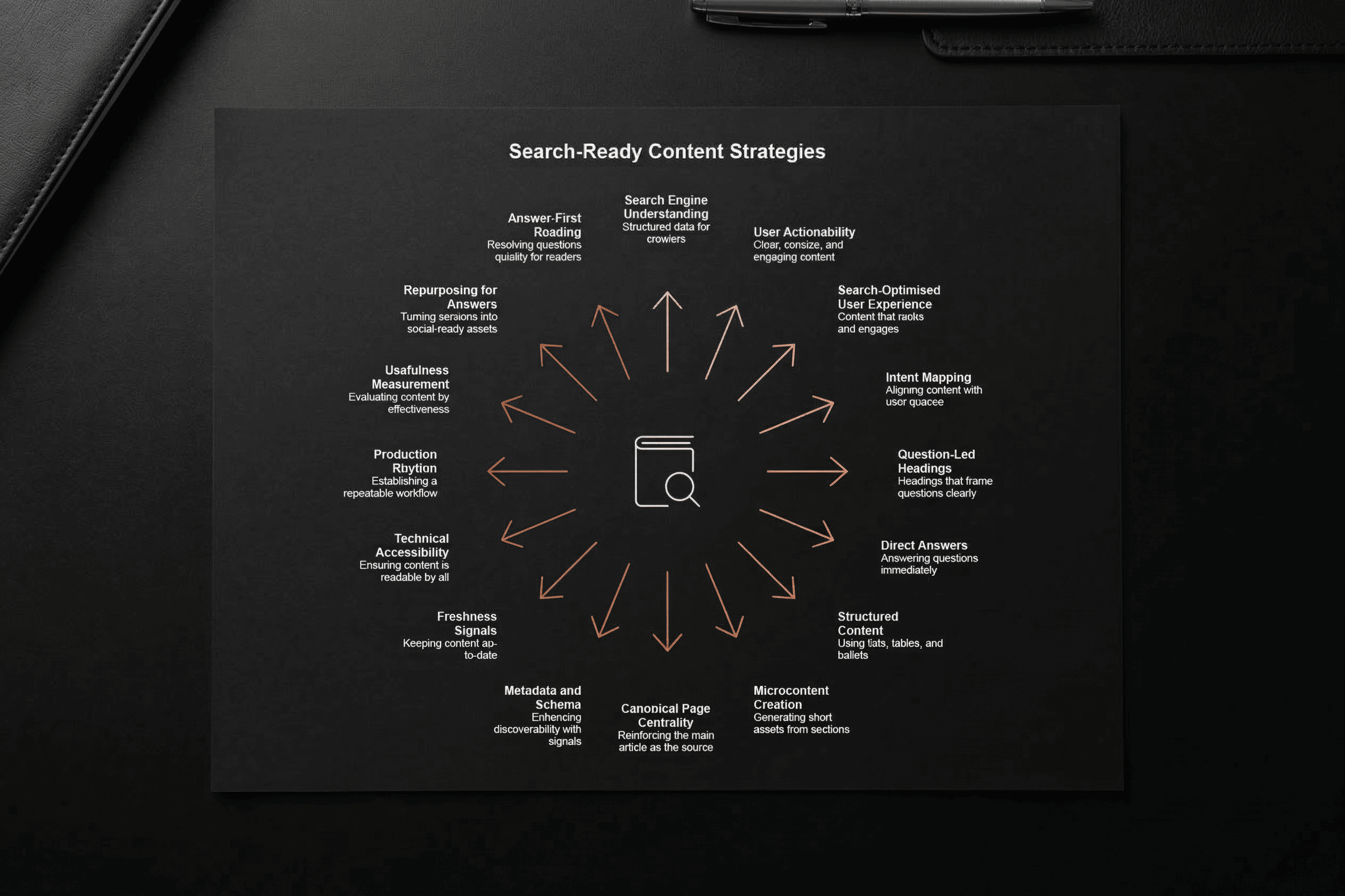
Search-Ready Content Strategies
From blog articles:
Search Engine Understanding - Structured data for crawlers
User Actionability - Clear, concise, and engaging content
Search-Optimised User Experience - Content that ranks and engages
Intent Mapping - Aligning content with user queries
Question-Led Headings - Headings that frame questions clearly
Direct Answers - Answering questions immediately
Structured Content - Using lists, tables, and bullets
Microcontent Creation - Generating short assets from sections
Canonical Page Centrality - Reinforcing the main article as the source
Metadata and Schema - Enhancing discoverability with signals
Freshness Signals - Keeping content up-to-date
Technical Accessibility - Ensuring content is readable by all
Production Rhythm - Establishing a repeatable workflow
Usefulness Measurement - Evaluating content by effectiveness
Repurposing for Answers - Turning sections into social-ready assets
Answer-First Reading - Resolving questions quickly for readers
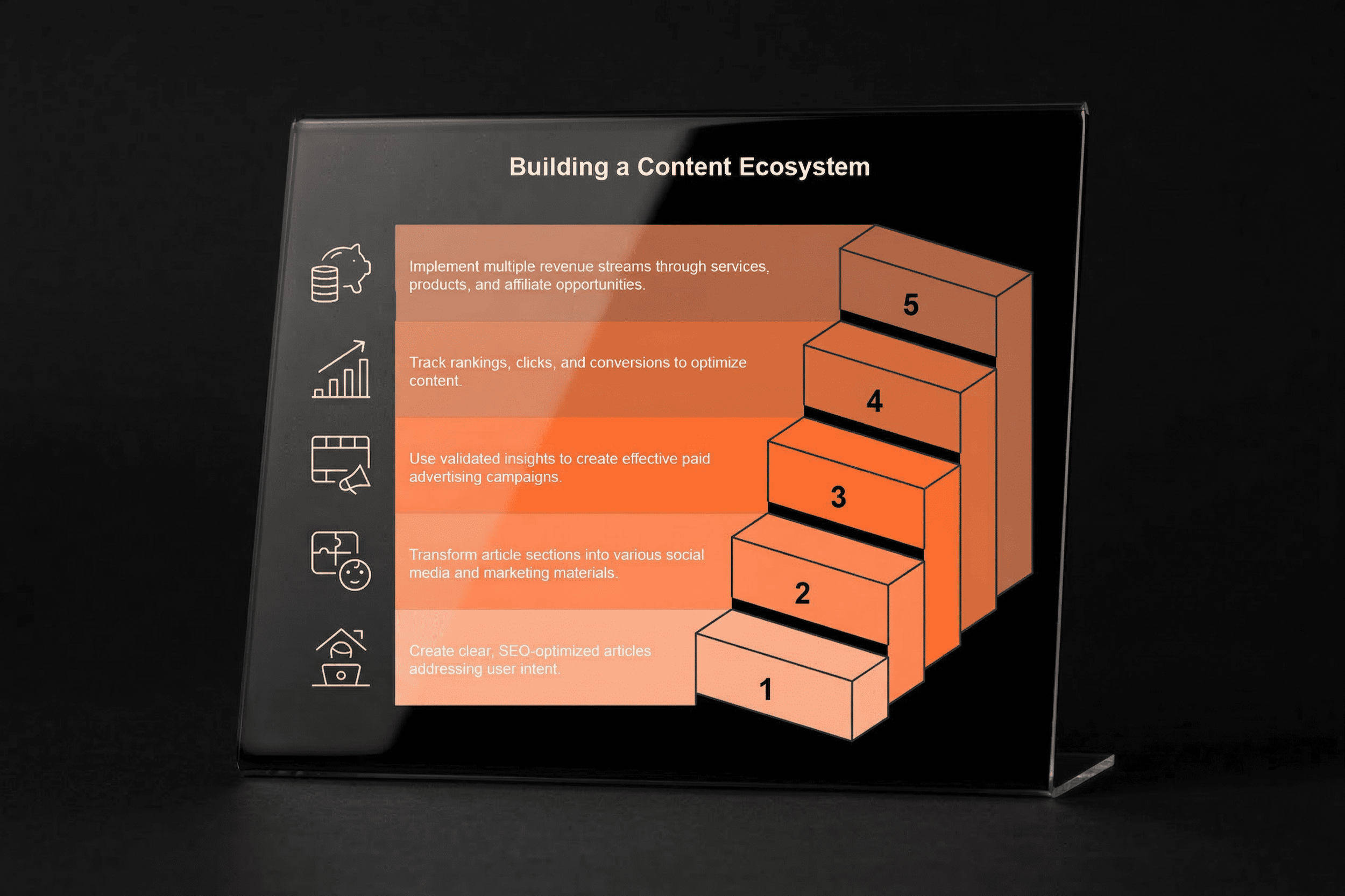
Building a Content Ecosystem
Create clear, SEO-optimised articles addressing user intent.
Transform article sections into various social media and marketing materials.
Use validated insights to create effective paid advertising campaigns.
Track rankings, clicks, and conversions to optimise content.
Implement multiple revenue streams through services, products, and affiliate opportunities.
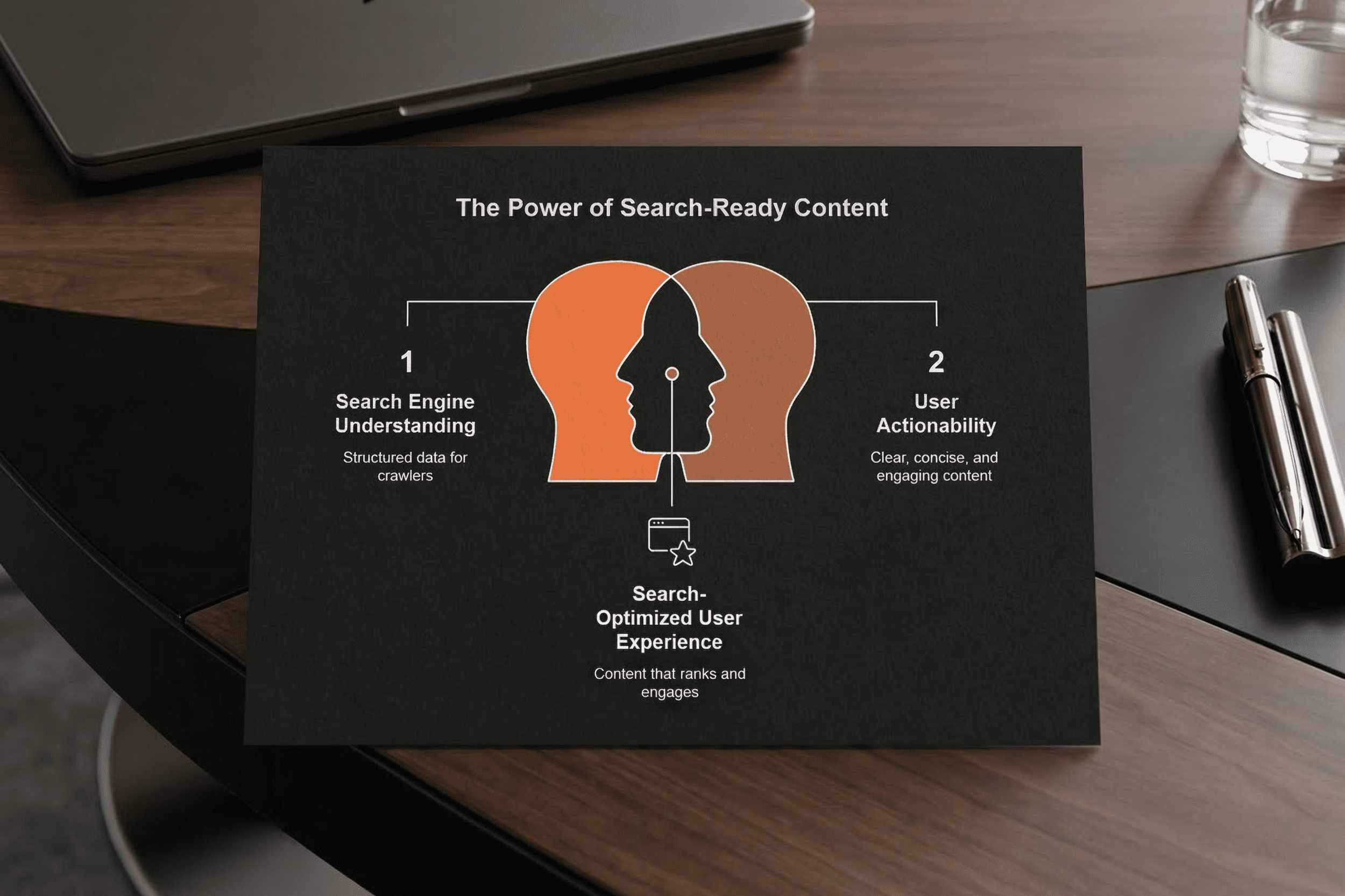
Search-Ready Content
Build pages that rank clearly, answer quickly, and travel further.
Search-ready content starts with intent, not guesswork. It structures each section around real questions, direct answers, and clearer signals so pages become easier to rank, easier to understand, and easier to reuse across search and answer surfaces.
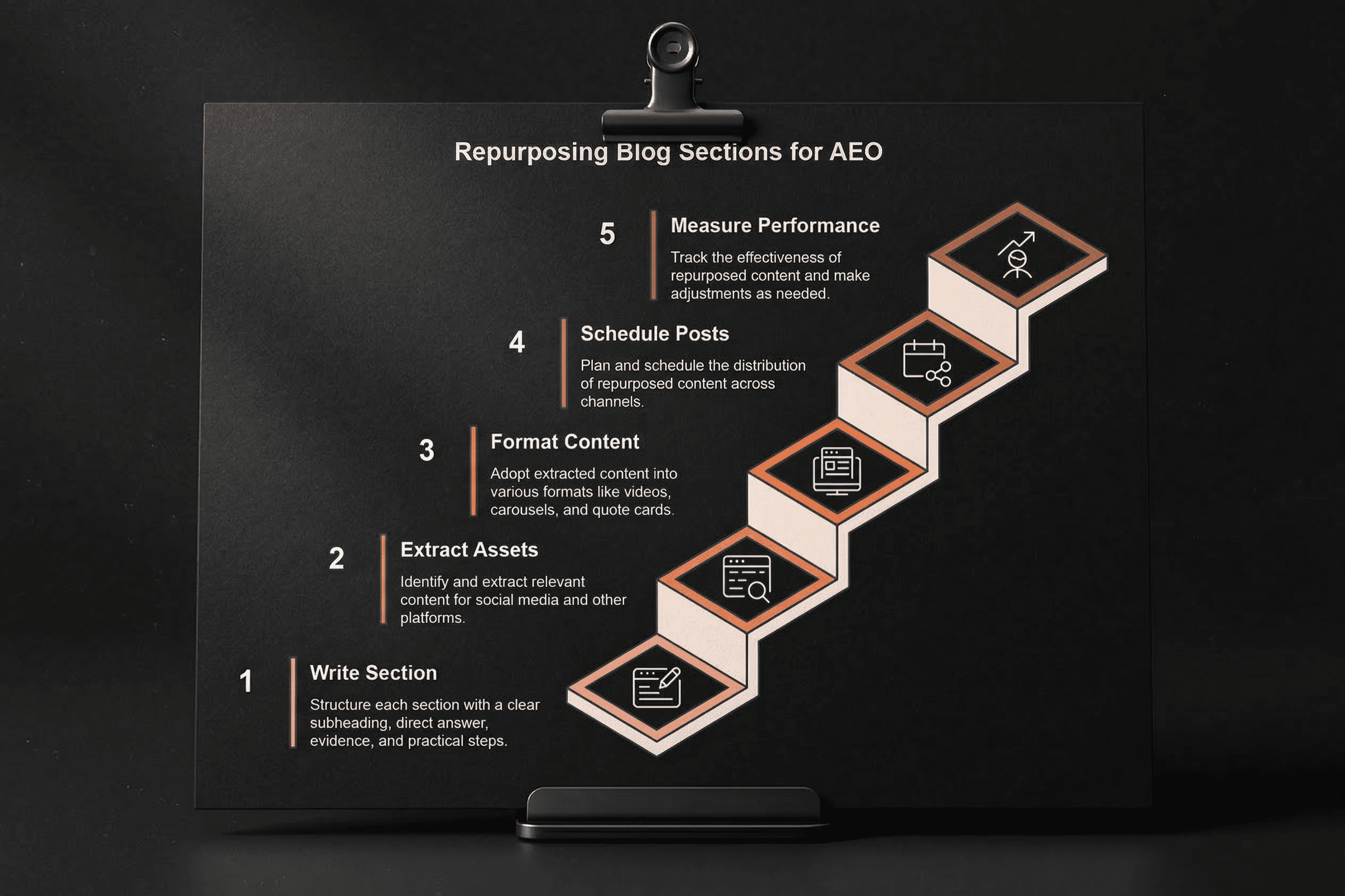
Repurpose for Answers
Turn every blog section into a social-ready answer asset.
This approach treats each article section as a reusable answer unit. With clearer headings, direct responses, supporting proof, and light metadata, one section can feed search visibility, AI extraction, social posts, and short-form content without losing its source value.
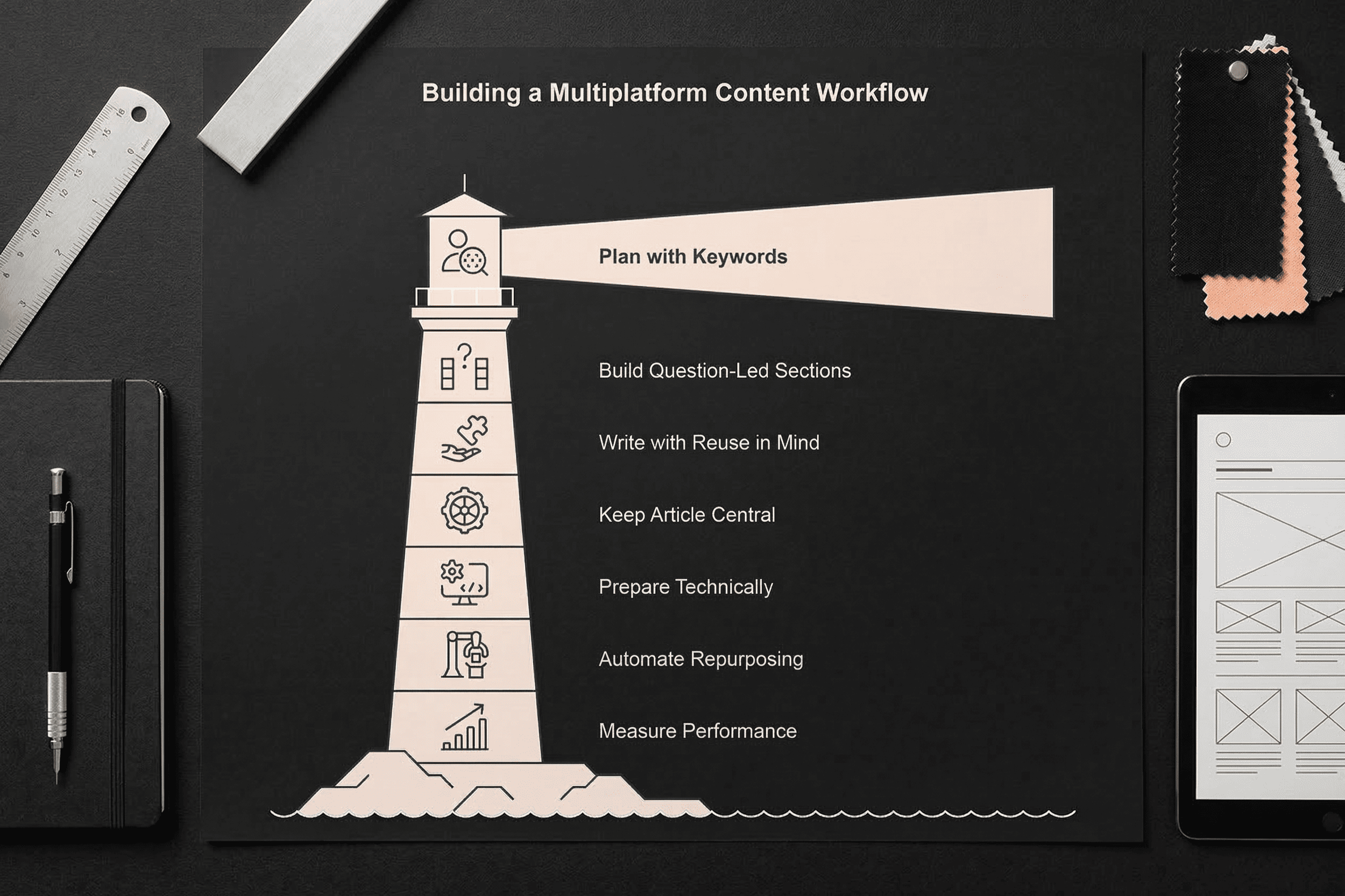
One Article, Many Working Parts
Build one blog article that can feed search, social, video, and answer engines.
A well-planned article should do more than publish once and disappear. By structuring sections around real questions, reusable answers, and extractable formats, one long-form piece can support wider distribution, stronger visibility, and more efficient content production over time.

Short-Form Paid Adverts
Turn long-form content into ad-ready video assets with clearer hooks, faster testing, and better reuse.
Short paid adverts perform better when they come from stronger source material. Instead of creating every asset from scratch, long-form content can be cut into focused clips with clearer hooks, proof, and calls to action that are easier to test and scale.

Monetise the Article, Not Just the Click
Turn long-form articles into section-based content assets that keep generating reach, trust, and revenue opportunities.
In a zero-click environment, one article should do more than attract a single visit. When broken into purposeful sections, it can support lead capture, social distribution, product pathways, and reusable commercial assets that continue creating value beyond the original page.
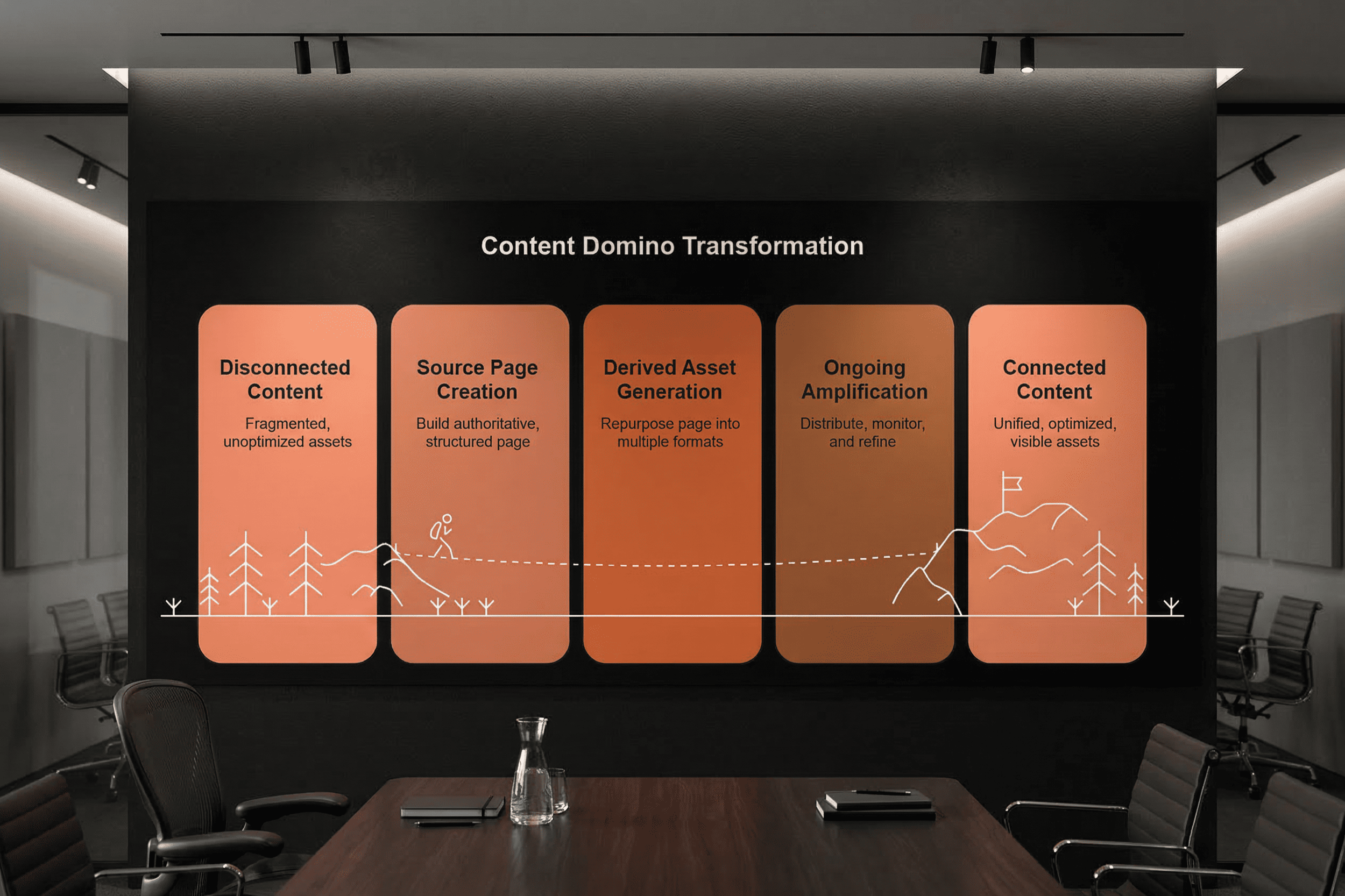
Content Domino
Turn one authoritative page into search, AI, and channel-wide visibility.
Content Domino is a source-first publishing model where the page becomes the centre of the workflow. One strong page can support search performance, answer visibility, social distribution, and reusable downstream assets while keeping authority concentrated around the original source.
Read each of these dedicated articles for greater insight:




Long read