Access ends in:
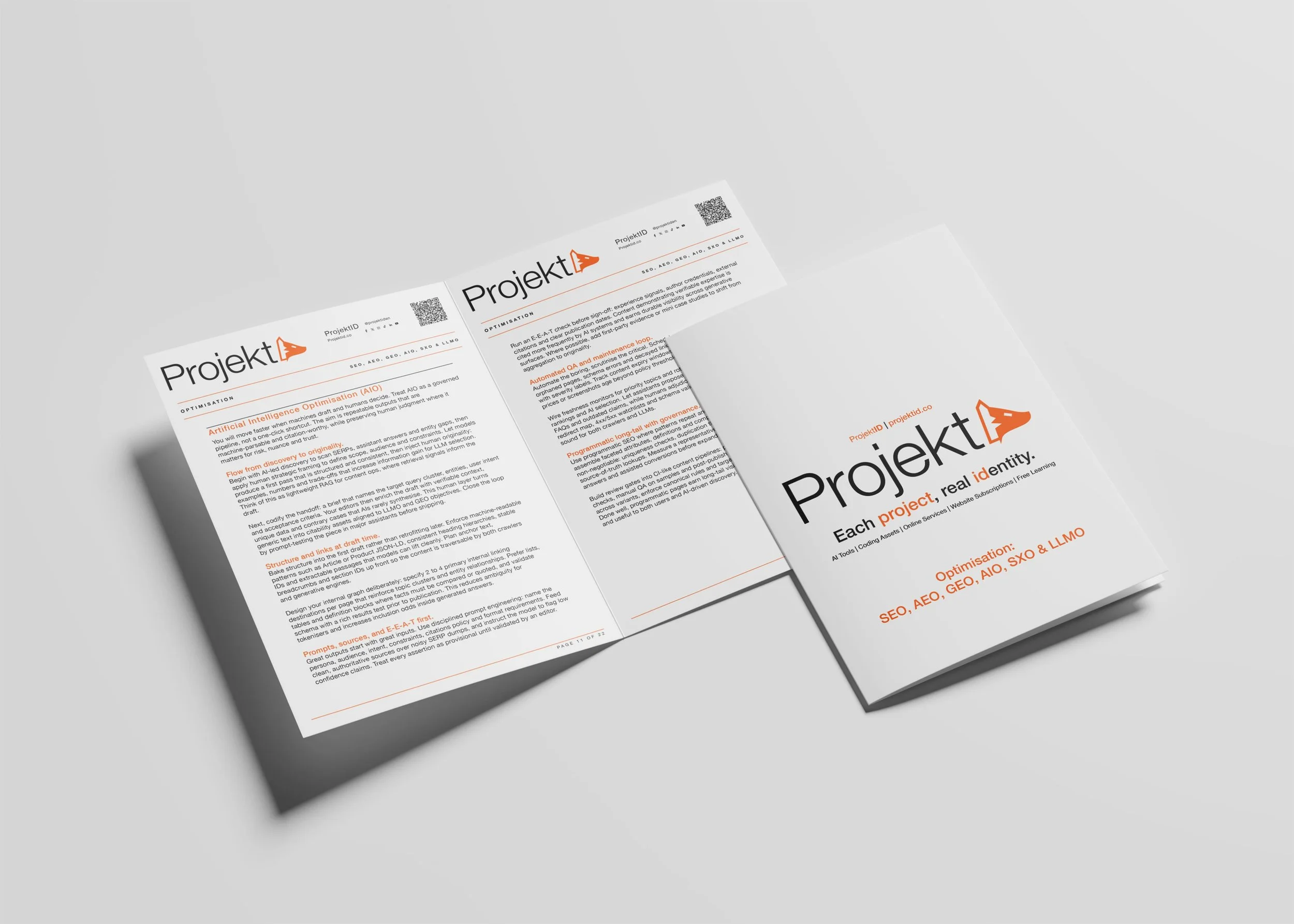
Optimisation: SEO, AEO, GEO, AIO, SXO, LLMO
A comprehensive guide.
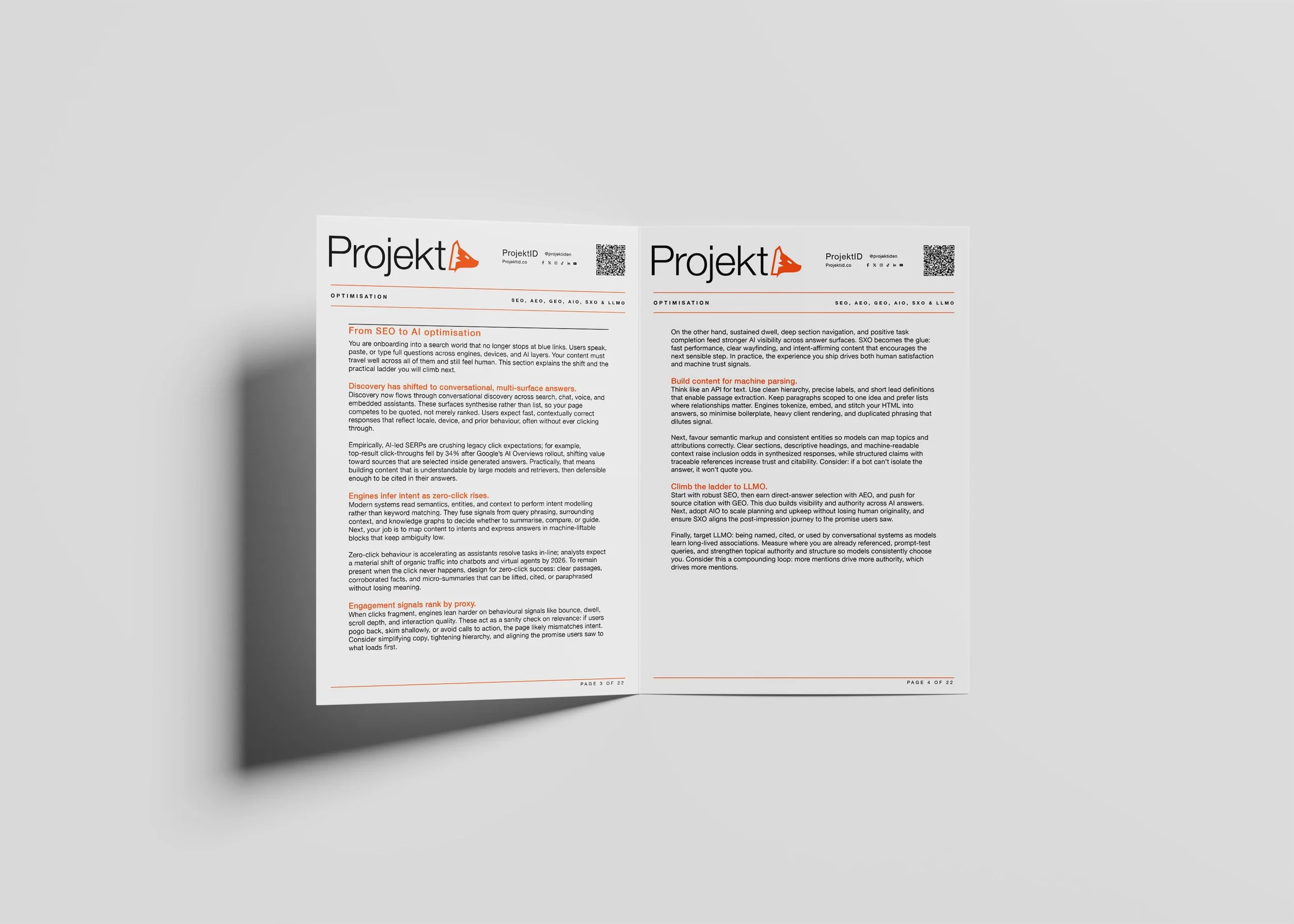
22-page guide
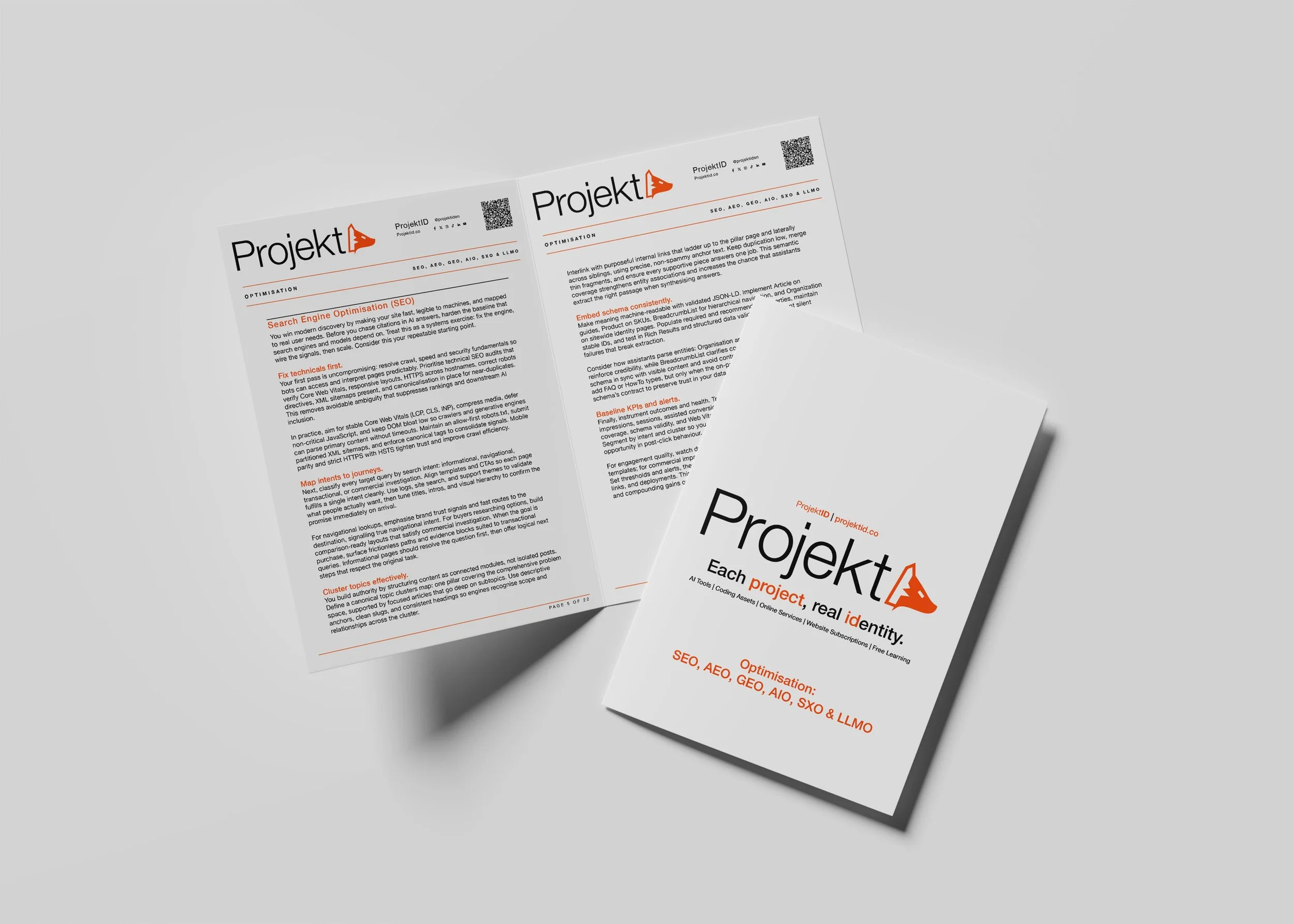
This guide, titled 'Optimisation: SEO, AEO, GEO, AIO, SXO, LLMO', serves as a technical guide for aspiring entrepreneurs.
Integrate optimisation logic
This guide delves into the complexities of search optimisation, highlighting the transition from traditional SEO to advanced methodologies such as AEO, GEO, AIO, SXO, and LLMO.
It offers actionable insights for founders and SMB owners on how to adapt their strategies to meet the demands of modern search engines and user expectations.
Optimisation, search, AI, users, experience
Search is evolving from traditional links to conversational discovery.
Users expect contextual accuracy and fast responses.
Optimisation now includes AEO, GEO, AIO, SXO, and LLMO.
AI systems interpret intent, changing content retrieval.
Engagement signals influence ranking by proxy.
Brief overview
SEO makes sites discoverable through content and authority.
AEO aims to be the trusted answer in AI results.
GEO focuses on citation within generated answers.
AIO optimises content and processes using AI.
SXO blends SEO with user experience for better engagement.
Search Engine Optimisation (SEO)
SEO matches user intent with discoverable content.
Three pillars: technical, on-page, and off-page SEO.
SEO remains essential for high-quality, structured sources.
Smaller sites can succeed with focused, long-tail content.
Measure outcomes through rankings, impressions, and conversions.
Answer Engine Optimisation (AEO)
AEO focuses on becoming the quoted answer in search.
Content must be easy to interpret and authoritative.
Structure answers with clear headings and concise formats.
Use structured data for better recognition by engines.
Monitor impressions without clicks to refine content.
Generative Engine Optimisation (GEO)
GEO aims to be the source for AI-generated answers.
Content must be crawled, understood, and trusted.
Emphasise semantic richness and comprehensive coverage.
Use schema and formatting for better extraction.
Build off-site trust through high-authority citations.
Artificial Intelligence Optimisation (AIO)
AIO optimises content and processes using AI.
Focus on improving accuracy, speed, and workflow.
Collaboration between AI and human input is crucial.
Structure content for AI-powered search discovery.
Maintain quality through regular updates and feedback.
Search Experience Optimisation (SXO)
SXO combines SEO with user experience for satisfaction.
Ensure technical performance and content relevance.
Provide clear navigation and conversion-friendly elements.
Map user journeys to enhance engagement.
Continuously tune experience based on analytics.
Large Language Model Optimisation (LLMO)
LLMO focuses on being cited in AI responses.
Prioritise topical authority and semantic structure.
Use schema for extraction and clarity.
Earn mentions in authoritative publications.
Measure visibility through AI tool mentions and traffic.
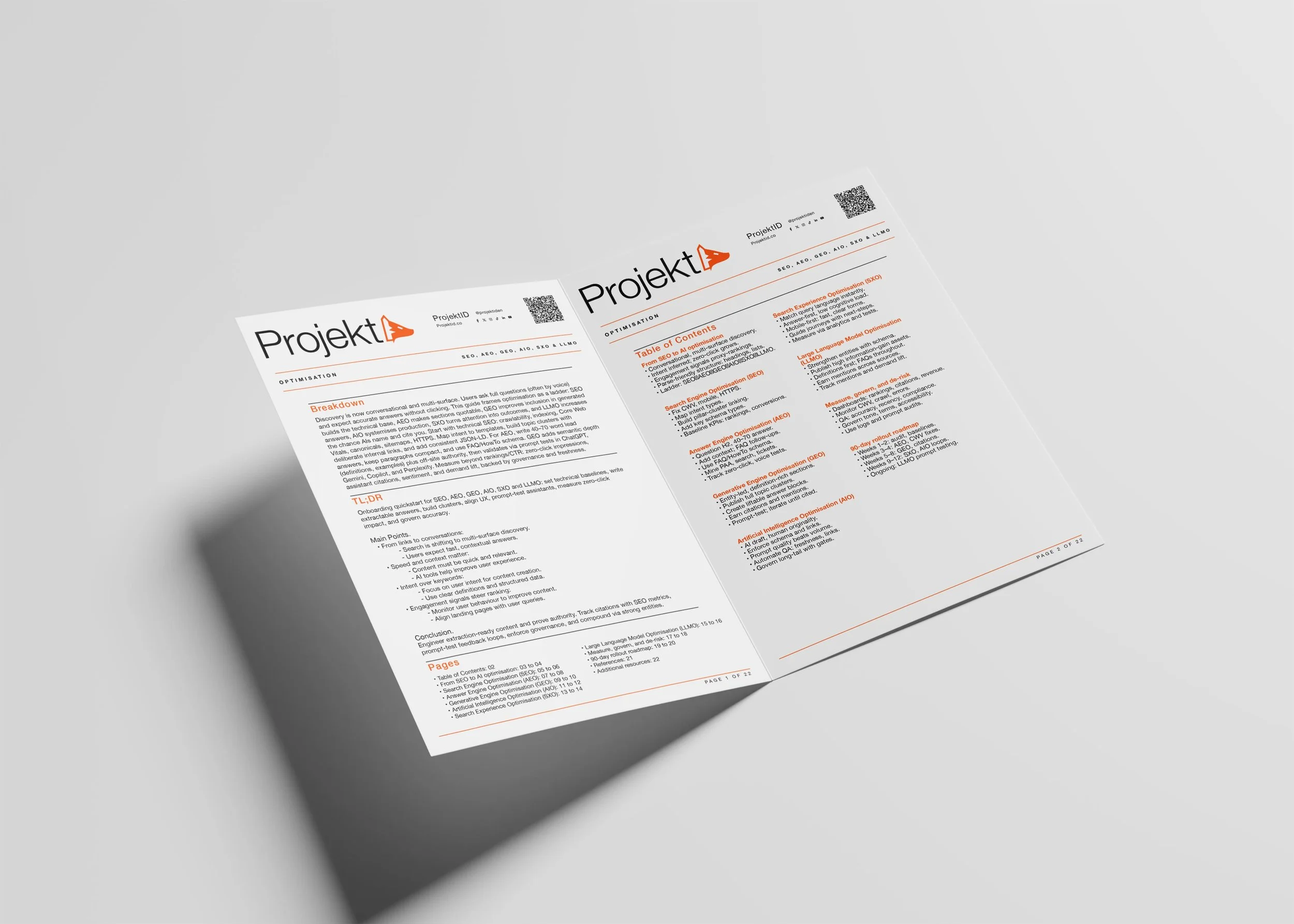
TLDR
This guide explores the evolution of search optimisation, highlighting the importance of adapting to AI-driven environments. It provides insights into various optimisation strategies that enhance visibility and user engagement.
Main Points.
From links to conversations:
Search is shifting to multi-surface discovery.
Users expect fast, contextual answers.
Speed and context matter:
Content must be quick and relevant.
AI tools help improve user experience.
Intent over keywords:
Focus on user intent for content creation.
Use clear definitions and structured data.
Engagement signals steer ranking:
Monitor user behaviour to improve content.
Align landing pages with user queries.
Conclusion.
Adapting to the new search landscape is crucial for maintaining visibility and engagement. Implementing these strategies will help businesses thrive in an AI-driven environment.